The Doctors’ Plot: antisemitism in Stalin’s final years, 1948–1953
On 13 January 1953, Pravda published false accusations against nine doctors. The Soviet news agency TASS implicated the Joint, an American Jewish organisation.
Read this article in: FrançaisEspañolItalianoעבריתالعربيةفارسیРусскийहिन्दी
Translated from French. Read the original.
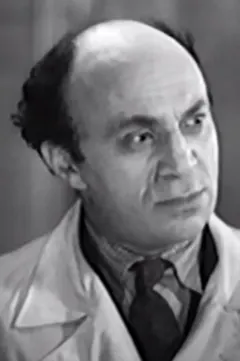
On 13 January 1953, readers of Pravda found a TASS news agency statement on page four. A “terrorist group of doctors”, it said, had been exposed at the Kremlin. TASS named nine doctors and framed the accusation in explicitly antisemitic terms 1. It falsely linked several of the doctors to the Joint and US intelligence and accused three of spying for Britain 1. In the weeks that followed, doctors were boycotted and a rumour swept the country that Jews were to be deported to Siberia. Then Stalin died, on 5 March, and on 4 April the authorities announced that the whole story was false. This article traces the five years from Solomon Mikhoels’s murder to the retraction, examining what the archives have confirmed and what they have yet to reveal.
A committee born in war and destroyed in peace
The Jewish Anti-Fascist Committee (JAC) was a creation of the Soviet government. In April 1942 it issued its first appeal “to the Jews of the whole world” to mobilise support for the Soviet war effort. Its chairman was the actor Solomon Mikhoels, director of the Moscow State Jewish Theatre 7. In the second half of 1943, Mikhoels and the poet Itzik Fefer toured the United States, Canada, Mexico and Britain to publicise the Soviet cause and raise funds 7. Historian Shimon Redlich, who published 181 archival documents on the committee, describes a propaganda body that, after victory, began defending Soviet Jews in the liberated areas and reporting instances of antisemitism. The authorities would hold this against it 6.
As early as November 1946, Mikhail Suslov, head of the Central Committee’s foreign policy department, submitted a report to the entire Party leadership, including Stalin. He concluded that the committee’s existence was “inappropriate and politically harmful” and proposed its “liquidation” 6. The end would come two years later.
Minsk, January 1948: a road “accident”
On the night of 12–13 January 1948, Mikhoels was killed in Minsk, where he had been sent on assignment. The critic Vladimir Golubov, who was travelling with him and worked for State Security, died alongside him 712. The official account described an accident in which a lorry had run over the two men 12. The Encyclopaedia Judaica records “a staged car accident in Minsk”. Writing for CommunistCrimes, Artyom Krechetnikov says Stalin ordered the murder and the Ministry of State Security (MGB) covered it up 712. The French Human Rights League (LDH), which revisited the case in 2021, called the murder “the starting point of a wave of repression against Jewish communists and anti-fascists” 11.
Mikhoels’s death would later be made to serve as evidence. The TASS statement of 13 January 1953 claimed that Professor Vovsi had received instructions to exterminate the Soviet leadership “through Shimeliovich and Mikhoels” 1. The victim had become the instigator.
1948–49: the committee is dissolved and “rootless cosmopolitans” are targeted
The committee was dissolved in November 1948. The Encyclopaedia Judaica dates the decision to 20 November. Krechetnikov cites a secret decision signed by Stalin on 28 November ordering the JAC’s “immediate” dissolution 712. The Yiddish publishing house Der Emes was closed. In the following months most Yiddish-language writers were arrested 7. Among them were Peretz Markish, David Bergelson, Leib Kvitko, David Hofstein and Itzik Fefer.
On 28 January 1949, Pravda published “On an Anti-Patriotic Group of Theatre Critics”. Every name it cited was Jewish. The phrase “rootless cosmopolitanism” appeared there 12. The campaign spread across the country, reaching the arts, the press, publishing, education and medicine 411. Historian Samson Madievski writes in Cahiers du monde russe that in 1949, “shortly after the destruction of the Jewish Anti-Fascist Committee”, a “vague but sinister rumour began to spread that the deportation of Jews was being prepared in the USSR” 4.
The campaign coincided with a turn in foreign policy. The USSR, which had supported the creation of Israel in 1947–48 (see How the Soviet Union helped bring Israel into being), now treated “Zionism” as an enemy. At the height of the Doctors’ Plot affair it would break diplomatic relations with the Jewish state 4.
The night of 12 August 1952
The closed trial of the committee defendants opened on 8 May 1952 before the Military Collegium of the Supreme Court 12. That spring, Deputy State Security Minister Mikhail Ryumin had submitted 42 volumes of “evidence” to Stalin. The Politburo confirmed the sentences recommended by the MGB before the hearings even began 6. The defendants had confessed under duress. Boris Shimeliovich, former chief physician at Botkin Hospital, and physiologist Lina Stern refused to submit and denounced their interrogators’ antisemitic conduct in court 6. The presiding judge, General Cheptsov, asked for further investigation because of “deficiencies in the investigation”. His request was rejected 6.
On the night of 12–13 August 1952, 13 defendants were secretly shot at the Lubyanka: former deputy foreign minister Solomon Lozovsky, poets Peretz Markish, Leib Kvitko, David Hofstein and Itzik Fefer, writer David Bergelson, actor Benjamin Zuskin, physician Boris Shimeliovich, historian Joseph Yuzefovich, editors Ilya Vatenberg and Emilia Teumin, journalist Leon Talmy and translator Khayke Vatenberg-Ostrovskaya 117. Only Lina Stern escaped death 6. According to the LDH, the suppression of the committee led to 125 convictions, including 25 death sentences 11. Five of the 13 were poets or writers. In Jewish memory, the date became the “Night of the Murdered Poets”.
Prague, November 1952: the Slánský trial
State antisemitism spread to the Soviet bloc’s “people’s democracies”. On 20 November 1952, the trial of Rudolf Slánský, former general secretary of the Czechoslovak Communist Party, and 13 other leaders opened in Prague 910. The indictment specified that 11 of the 14 defendants were “of Jewish origin”. They were tried for a “Trotskyite-Titoite-Zionist conspiracy” in the service of American imperialism 910. The trial was a rehearsed performance. Defence counsel were appointed a week beforehand, and rehearsals were recorded in case a defendant departed from the script 10. After seven days, 11 defendants were sentenced to death and three (Artur London, Vavro Hajdů and Eugen Löbl) to life imprisonment. President Gottwald rejected pleas for clemency. All 11 were hanged at dawn on 3 December 1952 and their ashes scattered 1011. The victims were declared innocent in 1963 and rehabilitated in 1968 9.
13 January 1953: “Arrest of a group of doctors engaged in sabotage”
Pravda published the TASS communiqué on 13 January 1953 1. It named nine doctors: Professors Vovsi, Vinogradov, M. B. Kogan, B. B. Kogan, Yegorov, Feldman, Etinger and Grinstein, and Dr Mayorov 1. It accused them of having “killed” Andrei Zhdanov in 1948 by concealing his heart attack and prescribing an inappropriate regimen, and of having shortened Alexander Shcherbakov’s life in 1945. It alleged that they subsequently targeted Marshals Vasilevsky, Govorov and Konev, General Shtemenko and Admiral Levchenko 1. Most were said to be linked to the “Joint”, described as an “international Jewish bourgeois-nationalist organisation” set up by American intelligence. Vinogradov, M. Kogan and Yegorov were said to be “long-standing agents of British intelligence” 1. The Joint, the American Jewish Joint Distribution Committee, is in fact a relief organisation founded in 1914 1617.
Vladimir Vinogradov was Stalin’s personal physician 813. On 20 January 1953, a decree of the Presidium of the Supreme Soviet awarded the Order of Lenin to Lydia Timashuk, a Kremlin Hospital doctor. A letter she had written in 1948 about Zhdanov’s treatment had been unearthed as a “revelation” 313. Historian David Brandenberger places the affair in the sequence that began with Mikhoels’s murder and the “anti-cosmopolitan” campaigns. In his words, “most scholars suspect Stalin played a major role” in fabricating it 8.
The archives have since yielded a decisive piece of evidence. According to notes taken by Deputy Premier Vyacheslav Malyshev, Stalin told the Central Committee Presidium on 1 December 1952: “Every Jew is a nationalist, an agent of American intelligence. […] There are many Jewish nationalists among the doctors!” 54. Historian Vladimir Naumov, secretary of the Russian presidential commission on rehabilitation, stresses that the dictator spoke “plainly, without any hint or allusion” 5.
Seven weeks of fear
Newspapers demanded vigilance and denounced “negligence” by the security agencies. Historian Gennady Kostyrchenko writes that the propaganda hysteria unleashed “an explosion of popular antisemitism”. Hostility towards the supposed “murderers in white coats” spread to Jews generally 4. The LDH describes hundreds of Jewish doctors and pharmacists arrested across the USSR, others boycotted and their families harassed 11.
In mid-January the Central Committee’s Agitation and Propaganda Department drafted a collective letter for Pravda. Some 60 prominent Jews, among them writer Vasily Grossman, poet Samuil Marshak, Ilya Ehrenburg and Veniamin Kaverin, were to sign it. It demanded “the most merciless punishment of the criminals” 8. Ehrenburg stalled, then wrote directly to Stalin. A second, more moderate version was commissioned in February but never published 8. The text published by Istochnik in 1997 contains no request for the “transfer” of Jews. It ends by seeking permission to publish a newspaper for the Jewish population 4. Naumov counters that several versions may have circulated. The one that provoked such a strong reaction from Ehrenburg and Kaverin may not have been the one recovered 5.
Kostyrchenko notes that the propaganda campaign surrounding the case eased after 20 February 1953 4. Stalin died on 5 March 11.
4 April 1953: “without any legal foundation”
On 4 April 1953, Pravda published a communiqué from the Interior Ministry, now headed by Lavrentiy Beria 213. It listed 15 people arrested in the case: the nine named on 13 January, plus Professors Vasilenko, Zelenin, Preobrazhensky, Popova, Zakusov and Shereshevsky. It declared that the allegations of sabotage, espionage and terrorism were false, that confessions had been obtained “by the use of investigative methods that are inadmissible and strictly prohibited by Soviet law”, and that those accused were rehabilitated. The investigators implicated were arrested 2. The communiqué listed 15 people arrested but only 13 released 2. Two names were missing from the list of those freed: Yakov Etinger and Mikhail Kogan, both of whom had died before the case ended 213. That evening, the US chargé d’affaires in Moscow, Jacob Beam, cabled the State Department that the accused had been arrested “without any legal foundation” and that a second communiqué from the Presidium of the Supreme Soviet had annulled “as erroneous” the decree of 20 January honouring Timashuk 3. On 6 April, a Pravda editorial denounced Ryumin’s “criminal adventurism”. He would be tried and sentenced to death in July 1954 3.
What Beria knew about the fabrication, and why he was so quick to expose it, remain disputed. In spring 1953, he also reopened the investigation into former security minister Abakumov, whom Stalin had sought to portray as the leader of a “Zionist organisation” inside the MGB 5. Naumov insists that reducing the affair to Ryumin’s ambition amounts to “relieving Stalin of his role as the chief organiser and inspiration of the state policy of antisemitism” 5.
Chronology
- 1942-04-07 — The Jewish Anti-Fascist Committee, chaired by Mikhoels, issues its first appeal “to the Jews of the whole world” 7.
- 1946-11 — Suslov submits a report proposing the committee’s “liquidation” 6.
- 1948-01-12/13 — Mikhoels is killed in Minsk. The official explanation is an accident 712.
- 1948-11 — The Jewish Anti-Fascist Committee is dissolved, Der Emes closed and Yiddish writers arrested 712.
- 1949-01-28 — Pravda denounces an “anti-patriotic group of theatre critics”, marking the public launch of the campaign against “rootless cosmopolitanism” 12.
- 1952-05-08 — The committee’s secret trial opens 12.
- 1952-08-12 — Thirteen defendants are shot at the Lubyanka 711.
- 1952-11-20 — The Slánský trial opens in Prague 910.
- 1952-12-01 — Stalin tells the Presidium: “Every Jew is a nationalist…” (Malyshev’s notes) 5.
- 1952-12-03 — Slánský and ten co-defendants are hanged 1011.
- 1953-01-13 — TASS issues its statement about “doctors engaged in sabotage” 1.
- 1953-01-20 — Lydia Timashuk receives the Order of Lenin 313.
- 1953-01 (mid-January) — Agitprop drafts the collective letter for prominent Jews. Ehrenburg refuses to sign 8.
- 1953-02-20 — The propaganda campaign eases, according to Kostyrchenko 4.
- 1953-03-05 — Stalin dies 11.
- 1953-04-04 — The Interior Ministry acknowledges false charges and coerced confessions. The doctors are rehabilitated and the Timashuk decree is annulled 23.
- 1953-04-06 — Pravda publishes an editorial attacking Ryumin 3.
- 1954-07 — Ryumin is tried and sentenced to death 3.
- 1963 / 1968 — The Slánský defendants are declared innocent, then rehabilitated 9.
What this tells us
Antisemitism belongs to no single political camp. Here, a state professing internationalism hanged, shot or imprisoned Jewish communists in the name of fighting “Zionism”. The TASS communiqué explicitly called the Joint a “Jewish” organisation and falsely portrayed it as an arm of US intelligence 1. Testimonies and historical studies record boycotts of Jewish doctors 81113. As early as February 1953, the LDH’s central committee wrote that “in this instance, anti-Zionism appears as one of the forms of antisemitism” 11. The guise would be used again. The USSR took the same reasoning to the UN in 1975 (see Resolution 3379 on Zionism and racism). Israeli policy, like any other state’s, can and must be open to challenge. The line is crossed when criticism shifts from a policy to a people and attributes to Jews as a group a hidden allegiance, a secret plan or a foreign hand. That is the structure of the TASS communiqué itself, and why the Doctors’ Plot remains a point of reference for distinguishing criticism from hatred today.
Sources
- Agence TASS, « Арест группы врачей-вредителей » (« Arrestation d'un groupe de médecins saboteurs »), Pravda, n° 13, 13 janvier 1953, p. 4, texte russe reproduit sur Wikisource, https://ru.wikisource.org/wiki/%D0%A1%D0%BE%D0%BE%D0%B1%D1%89%D0%B5%D0%BD%D0%B8%D0%B5_%D0%A2%D0%90%D0%A1%D0%A1_%D0%BE%D0%B1_%D0%B0%D1%80%D0%B5%D1%81%D1%82%D0%B5_%D0%B2%D1%80%D0%B0%D1%87%D0%B5%D0%B9-%D0%B2%D1%80%D0%B5%D0%B4%D0%B8%D1%82%D0%B5%D0%BB%D0%B5%D0%B9
- Ministère de l'Intérieur de l'URSS, « Сообщение министерства внутренних дел по делу врачей-вредителей » (communiqué sur l'affaire des médecins), Pravda, 4 avril 1953, texte russe reproduit sur Wikisource, https://ru.wikisource.org/wiki/%D0%A1%D0%BE%D0%BE%D0%B1%D1%89%D0%B5%D0%BD%D0%B8%D0%B5_%D0%BC%D0%B8%D0%BD%D0%B8%D1%81%D1%82%D0%B5%D1%80%D1%81%D1%82%D0%B2%D0%B0_%D0%B2%D0%BD%D1%83%D1%82%D1%80%D0%B5%D0%BD%D0%BD%D0%B8%D1%85_%D0%B4%D0%B5%D0%BB_%D0%BF%D0%BE_%D0%B4%D0%B5%D0%BB%D1%83_%D0%B2%D1%80%D0%B0%D1%87%D0%B5%D0%B9-%D0%B2%D1%80%D0%B5%D0%B4%D0%B8%D1%82%D0%B5%D0%BB%D0%B5%D0%B9
- Jacob D. Beam (chargé d'affaires des États-Unis à Moscou), télégramme n° 1418 au Département d'État, 4 avril 1953, dans Foreign Relations of the United States, 1952-1954, vol. VIII, document 577, Office of the Historian, https://history.state.gov/historicaldocuments/frus1952-54v08/d577
- Samson Madievski, « 1953 : la déportation des juifs soviétiques était-elle programmée ? », Cahiers du monde russe, 41/4, octobre 2000, p. 561-568 (Éditions de l'EHESS), https://journals.openedition.org/monderusse/pdf/59
- Vladimir P. Naoumov, « Разгром еврейского антифашистского комитета » (« La destruction du Comité antifasciste juif »), rapport au colloque « Le stalinisme tardif et la question juive » (Eichstätt, 1997), Forum noveïcheï vostotchnoevropeïskoï istorii i koultoury, n° 2, 2005, Université catholique d'Eichstätt-Ingolstadt, https://www1.ku.de/ZIMOS/forum/docs/8Naumov%20rus.pdf
- Theodore H. Friedgut, « Stalin's Bureaucracy in Action: The Creation and Destruction of the Jewish Anti-Fascist Committee » (recension de Shimon Redlich, War, Holocaust and Stalinism, 1995), Yad Vashem, Shoah Resource Center, https://wwv.yadvashem.org/odot_pdf/Microsoft%20Word%20-%203213.pdf
- Yehuda Slutsky et Shmuel Spector, « Anti-Fascist Committee, Jewish », Encyclopaedia Judaica, 2e éd., reproduit par la Jewish Virtual Library, https://www.jewishvirtuallibrary.org/jsource/judaica/ejud_0002_0002_0_01147.html
- David Brandenberger, « Doctors' Plot », Encyclopedia of Russian History, reproduit sur Encyclopedia.com, https://encyclopedia.com/history/encyclopedias-almanacs-transcripts-and-maps/doctors-plot
- United States Holocaust Memorial Museum (via le portail EHRI), « Trial of Rudolf Slánský », description du fonds du ministère tchécoslovaque de la Sécurité nationale, https://portal.ehri-project.eu/units/us-005578-irn550894
- « Slánský Trial », Encyclopedia of Russian History, reproduit sur Encyclopedia.com, https://encyclopedia.com/history/encyclopedias-almanacs-transcripts-and-maps/slansky-trial
- Gilles Manceron, « De l'affaire Rosenberg à la "non-affaire" Solomon Mikhoels », Droits & Libertés, n° 195, Ligue des droits de l'Homme, octobre 2021, p. 24-26, https://www.ldh-france.org/wp-content/uploads/2022/02/HL195-Actualite-7.-De-laffaire-Rosenberg-a-la-non-affaire-Solomon-Mikhoels.pdf
- Artiom Kretchetnikov, « Witch hunt after the Holocaust: anti-Jewish repressions in the Soviet Union », CommunistCrimes.org (Institut estonien de la mémoire historique), 23 mars 2020, https://communistcrimes.org/en/witch-hunt-after-holocaust-anti-jewish-repressions-soviet-union
- A. Mark Clarfield, « The Soviet "Doctors' Plot" — 50 years on », BMJ, vol. 325, 21 décembre 2002, p. 1487-1489, https://pmc.ncbi.nlm.nih.gov/articles/PMC139050
- Victor H. Winston, « Reflections on the anticipated mass deportation of Soviet Jews », Post-Soviet Affairs, vol. 31, n° 6, 2015, p. 471-490 (résumé), https://ideas.repec.org/a/taf/rpsaxx/v31y2015i6p471-490.html
- Ralph Seliger, « Did Stalin's Death Save Soviet Jews? » (compte rendu d'une soirée avec Joshua Rubenstein et Jonathan Brent, YIVO, 8 juin 2016), Jewish Currents, 17 juin 2016, https://jewishcurrents.org/did-stalins-death-save-soviet-jews
- Archives du JDC, 1914–1919, https://archives.jdc.org/our-stories/history-of-jdc/1914-1919/
- USHMM, histoire du Joint, https://encyclopedia.ushmm.org/content/en/article/american-jewish-joint-distribution-committee-and-refugee-aid
The story in 30 seconds
Read the main facts at a glance and share the link.
- On 12–13 Jan 1948 in Minsk, Stalin had Solomon Mikhoels, head of the State Jewish Theatre and Jewish Anti-Fascist Committee, killed in a staged accident.
- On 12 August 1952, 13 defendants in the Jewish Anti-Fascist Committee trial were executed, including the writers Markish, Bergelson and Fefer.
- TASS accused nine doctors on 13 January 1953. On 4 April, after Stalin’s death, the Interior Ministry acknowledged that the accusations were false.
Spotted an error or a missing source? Write to us : we publish corrections in the article.
Related reading
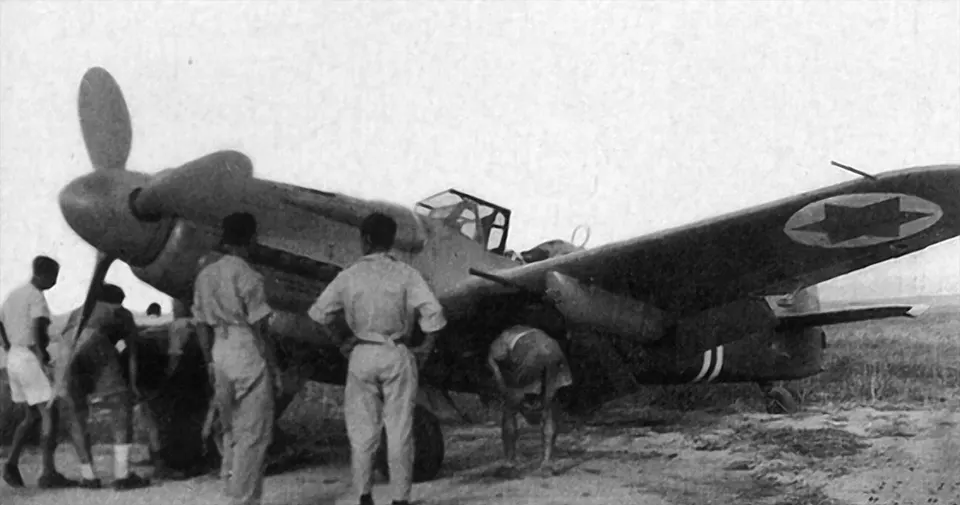
How the Soviet Union helped bring Israel into being: Gromyko at the UN, Czech arms and a break in relations
From the UN vote on the partition of Palestine to arms deliveries from Czechoslovakia, how did the Soviet Union put its support for Israel into practice in 1947 and 1948?
America before the Holocaust: from the lynching of Leo Frank to immigration quotas
From the Leo Frank case to the fate of Jewish refugees, how did antisemitism manifest itself in the United States before the Second World War?
Hebron, 24 August 1929: the massacre that uprooted a four-century-old Jewish community
What happened in Hebron in August 1929? This account traces the massacre of Jewish residents, the help given by Arab neighbours and the evacuation of the survivors.