America before the Holocaust: from the lynching of Leo Frank to immigration quotas
From the Leo Frank case to the fate of Jewish refugees, how did antisemitism manifest itself in the United States before the Second World War?
Read this article in: FrançaisEspañolItalianoעבריתالعربيةفارسیРусскийहिन्दी
Translated from French. Read the original.
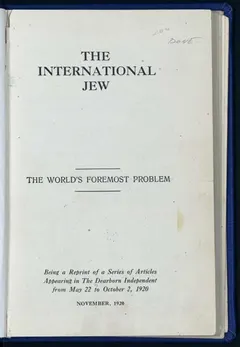
In France, pre-war antisemitism brings to mind the Dreyfus affair, the political leagues of the 1930s and then Vichy. The United States of the same period is remembered as a refuge, the democracy that eventually helped liberate Europe. That picture is accurate as far as it goes. It also obscures a history amply documented by American historians and the United States Holocaust Memorial Museum (USHMM) in Washington. Between 1915 and 1941, America experienced mass antisemitism promoted by industrialists, priests, university presidents and national heroes. Federal immigration quotas at the time were based on national origin 9. Here is how events unfolded.
1915: the lynching of Leo Frank and the rebirth of the Klan
On 26 April 1913 in Atlanta, Georgia, Mary Phagan, a 13-year-old worker at the National Pencil Company, was found dead in the factory basement 12. Leo Frank, the factory superintendent, who was Jewish, was arrested three days later 1. After a four-week trial, he was sentenced to death in late summer 1913 12. The Supreme Court rejected his appeals, despite a dissent by Justices Holmes and Hughes 1.
In June 1915, on the eve of the execution, Governor John Slaton, convinced of Frank’s innocence, commuted his sentence to life imprisonment 12. On the night of 16 August 1915, 25 men calling themselves the “Knights of Mary Phagan” abducted Frank from the Milledgeville prison farm and took him to Marietta, Phagan’s hometown, where they hanged him from an oak tree 12. The New Georgia Encyclopedia describes them as “prominent citizens” of Marietta, men with standing in the community 1. The next morning, 17 August, nearly 3,000 people came to see the body 1.
On Thanksgiving evening in 1915, William J. Simmons and 16 other men climbed Stone Mountain near Atlanta, lit a cross and proclaimed the rebirth of the Knights of the Ku Klux Klan. Several had belonged to the Knights of Mary Phagan 3. This second Klan, which targeted Catholics, Jews and immigrants as well as Black people, had about five million members in the early 1920s 3.
The case had another legacy. In 1913, lawyer Sigmund Livingston founded the Anti-Defamation League (ADL) in response to the trial 2. In 1986, Georgia granted Frank a posthumous pardon on the grounds that the lynching had deprived him of his right to further appeals. The pardon did not declare him innocent 12.
Henry Ford, the industrialist who circulated the Protocols
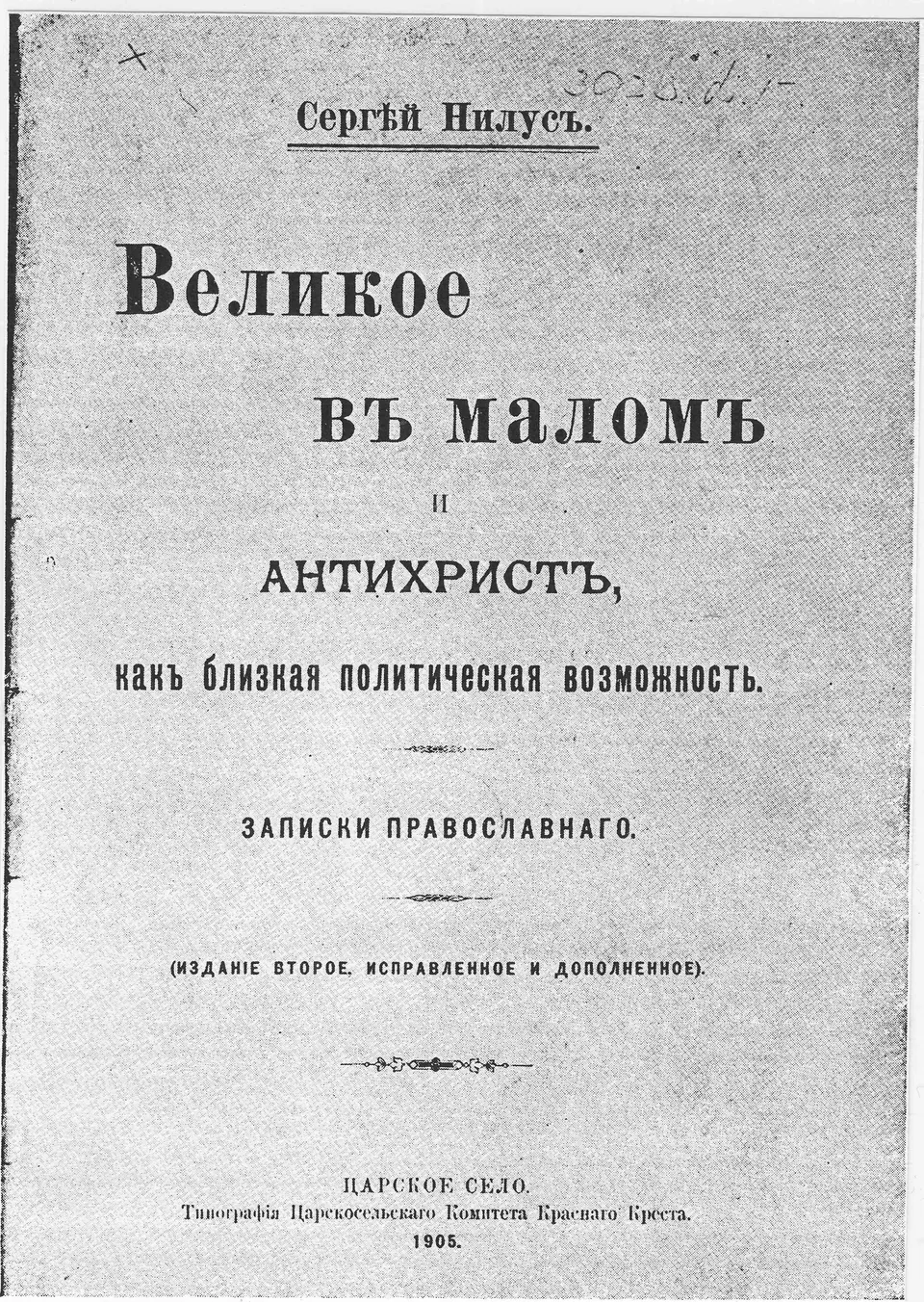
On 22 May 1920, Henry Ford’s weekly, the Dearborn Independent, devoted its front page to an attack on Jews. Another 91 issues followed on the same theme 4. Between November 1920 and May 1922, the articles were collected in four volumes as The International Jew 4. The ADL puts the paper’s peak circulation at about 700,000 4. The American Jewish Archives gives a figure of at least 900,000 in 1926 6. Ford dealerships distributed it, and schools and libraries received free copies 5. The series drew on the Protocols of the Elders of Zion, an antisemitic forgery published in Russia in 1903 whose authorship remains disputed 521. In 1921, Ford said the Protocols “fit in with what is going on” 4.
In 1925, lawyer Aaron Sapiro sued Ford for libel after the paper accused him of seeking control over American agriculture 5. The trial opened in Detroit in 1927. After Ford had an accident, his representatives sought a mistrial over contact between a juror and a journalist 4. Ford then issued a public apology to Jews, drafted by Louis Marshall, president of the American Jewish Committee 45. A settlement with Sapiro was announced on 16 July 1927 4. The paper ceased publication that year 6.
The response in Germany was direct. Ford was the only American named in Mein Kampf, the “one great man” who still resisted the Jews 56. On 30 July 1938, his 75th birthday, Ford received the Grand Cross of the German Eagle, the highest Nazi decoration for a foreigner. He was the first American to accept it 45.
Everyday exclusion at universities, hotels, clubs and in neighbourhoods
In 1921–22, Jews made up 21.5% of Harvard students and about 3.5% of the US population 8. On 21 June 1922, a faculty committee asked whether there was a “Jewish problem” and answered yes 8. Harvard’s president, A. Lawrence Lowell, proposed a 15% ceiling 7. His explanation was that “antisemitic feeling among the students is increasing, and it grows in proportion to the increase in the number of Jews” 7.
In 1923, a 13-member committee rejected an explicit quota, invoking “Harvard’s traditional policy of freedom from discrimination on grounds of race or religion” 7. Lowell obtained the same result by other means: letters of recommendation, interviews, assessments of “character”, geographical distribution, a class size capped at 1,000 from 1924 and a compulsory photograph from 1926 78.
Harvard was hardly alone. At Columbia, where Jews had accounted for up to 40% of students before 1920, the medical school had “very considerably reduced” their share by 1922 8. A Yale admissions memorandum that year listed the methods used by neighbouring institutions: “Columbia: psychological tests. Princeton: student sentiment” 8.
Social exclusion went back further. In May 1877, banker Joseph Seligman was turned away from the Grand Union Hotel in Saratoga Springs. The manager had given instructions to admit “no Israelites” 18. Hotels subsequently screened guests by surname, exchanged lists of Jewish guests or simply advertised their policy. One Catskills advertisement announced “No Hebrews or dogs” 18. Barred from country clubs and business clubs, Jews founded their own clubs, hotels and fraternities 18. As late as 1947, an ADL survey in New England found that nearly half the hotels it studied excluded Jews 18. Eric Yellin shows that recollections of Black and Jewish families facing identical exclusions do not accurately reflect the property covenants he studied around Washington 19.
1924: the Johnson-Reed Act closes the door
In 1921, a first law restricted immigration from each country to 3% of its nationals counted in the 1910 census 9. The 1924 act, signed by President Coolidge, cut the rate to 2% and moved the baseline back to the 1890 census, before the large-scale arrival of Italians, Poles and Eastern European Jews 9. In practice, it shut off immigration from most Asian countries 9. In the words of the State Department’s Office of the Historian, “the most basic purpose of the 1924 Immigration Act was to preserve the ideal of US homogeneity” 9.
For Jews, the effect was stark. Jewish immigration fell from peaks of over 100,000 arrivals a year before 1914 to about 8,000 a year 18. During the debates, lawmakers described Jews as “dirty” and “diseased” 18. The same quotas, unchanged, would apply to refugees from Nazism.
Father Coughlin’s 30 million listeners
Charles Coughlin, a Catholic priest from suburban Detroit, gave his first radio sermon on 17 October 1926 10. In 1930, he joined the national CBS network. In the 1930s he regularly drew some 30 million listeners in a country of 122 million people 10. In 1936, he founded a weekly, Social Justice, which turned to antisemitism in 1937–38 and serialised the Protocols of the Elders of Zion 10.
On 20 November 1938, ten days after Kristallnacht, Coughlin broadcast a sermon entitled “Persecution — Jewish and Christian”. He blamed “Jewish Communists” for the violence and claimed that Jews “control the radio and the press” 10. Stations gradually dropped him. In 1941, the archbishop of Detroit barred him from the airwaves. In 1942, the postal service refused to carry Social Justice, which was accused of publishing “enemy propaganda” 10.
20 February 1939: swastikas at Madison Square Garden
On 20 February 1939, two days before George Washington’s birthday, the German American Bund, an American Nazi organisation led by Fritz Kuhn, filled Madison Square Garden. More than 20,000 attended according to History, or 22,000 according to the German Historical Institute in Washington 111222. The poster advertised a “Pro American Rally”. A nine-metre portrait of Washington stood onstage, flanked by swastikas. The crowd gave the Nazi salute 12. Kuhn, a German engineer who had arrived in 1928, modelled the Bund on the Nazi Party, with uniforms, stewards and summer camps 1112. When a young Jewish New Yorker, Isadore Greenbaum, went onstage to interrupt him, stewards and police beat him to the cheers of the crowd. A court later fined him $25 12. Outside, protesters and police surrounded the arena 12. Kuhn was jailed in the months that followed, stripped of his citizenship in 1943 and deported after the war 11.
Refugees, opinion polls and the administration
The United States applied the 1924 quotas to Jewish refugees’ applications 913. The combined quota for Germany and Austria allowed at most 27,370 visas a year 13. By 30 June 1938, nearly 140,000 people were on the waiting list. By September there were 220,000 13. At Évian in July 1938, almost every government refused to accept more refugees. The Dominican Republic was an exception 1320.
Gallup’s polls were unequivocal 14. In April 1938, 54% of Americans believed that “the persecution of Jews in Europe has been partly their own fault” 14. In November 1938, after Kristallnacht, 94% disapproved of the Nazis’ treatment of Jews. That same week, asked “Should we allow a larger number of Jewish exiles from Germany to come to the United States to live?”, 72% said no 14. In January 1939, 83% opposed admitting additional refugees 13, and 67% opposed admitting 10,000 refugee children from Germany 14. Specifying that the children were “mostly Jewish” made little difference to the result 14.
In February 1939, Senator Robert Wagner and Representative Edith Nourse Rogers introduced a bill to admit 20,000 German children under 14 outside the quota 13. Congress never put it to a vote 13.
On 13 May 1939, the liner St Louis sailed from Hamburg for Havana with 937 passengers, nearly all Jewish refugees 15. On 27 May, Cuba admitted 28 passengers. One other passenger was taken to hospital in Havana 15. The ship sailed so close to the Florida coast that passengers could see the lights of Miami. Some sent telegrams to Roosevelt. The State Department replied that they must “await their turns on the waiting list” 15. On 6 June, the St Louis sailed back to Europe. Britain took 288 passengers, the Netherlands 181, Belgium 214 and France 224. Of those who returned, 254 would be murdered in the Holocaust 15.
At the State Department, Breckinridge Long, an assistant secretary of state since January 1940, set the policy. In late June 1940, he wrote that consuls could “postpone and postpone and postpone the granting of the visas” 16. In June 1941, his staff ordered visas to be denied to anyone with close relatives in occupied territory 16. Long lost oversight of the Visa Division in January 1944 and remained an assistant secretary of state until he resigned in November 16.
11 September 1941: Lindbergh in Des Moines
Charles Lindbergh, celebrated for the first solo flight across the Atlantic, was the best-known spokesman for the America First Committee, which opposed entering the war. On 18 October 1938, he had accepted a decoration from Göring 17. At the Coliseum in Des Moines, Iowa, on 11 September 1941, he delivered “Who Are the War Agitators?” and named three groups: “the British, the Jewish and the Roosevelt administration” 17. He said he understood Jewish hostility to Nazism, then added that “their greatest danger to this country lies in their large ownership and influence in our motion pictures, our press, our radio and our government”. He warned that “tolerance is a virtue that depends upon peace and strength” 17.
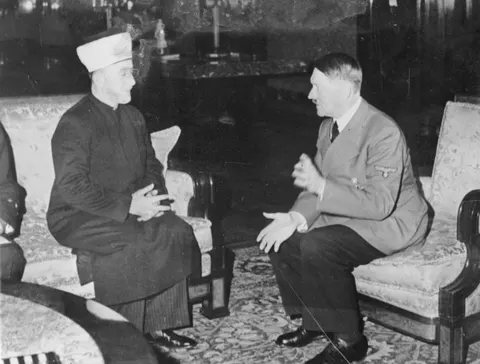
The press response, including from newspapers opposed to the war, was “decidedly negative”. On its front page, the Des Moines Register ran a cartoon showing Hitler and Mussolini applauding 17. The America First Committee refused to disavow Lindbergh but did not invite him back. Pearl Harbor ended the debate three months later 17. At about the same time in Berlin, the Mufti of Jerusalem made the opposite choice.
Chronology
- 1913-04-26 — Mary Phagan is murdered in Atlanta 12.
- 1915-08-17 — Leo Frank is lynched in Marietta 12.
- 1915-11 — The Ku Klux Klan is reborn on Stone Mountain on Thanksgiving evening 3.
- 1920-05-22 — The Dearborn Independent publishes its first antisemitic front page 4.
- 1922 — Lowell proposes capping Jewish enrolment at Harvard at 15% 78.
- 1924 — The Johnson-Reed Act sets quotas at 2% of the 1890 census figures 9.
- 1927-07-16 — Settlement in the Sapiro case. Ford apologises publicly and the paper closes the same year 46.
- 1938-07-30 — Ford receives the Grand Cross of the German Eagle 45.
- 1938-11 — In a Gallup poll, 72% oppose admitting more Jewish exiles from Germany 14.
- 1938-11-20 — Coughlin delivers “Persecution — Jewish and Christian” 10.
- 1939-02 — The Wagner-Rogers bill to admit 20,000 children is introduced. It never comes to a vote 13.
- 1939-02-20 — The Bund holds its Madison Square Garden rally 1112.
- 1939-05-13 → 06-06 — Voyage of the St Louis. Of its passengers, 254 will perish 15.
- 1940-06 — Breckinridge Long’s memorandum urges consuls to “postpone and postpone and postpone” 16.
- 1941-09-11 — Lindbergh speaks in Des Moines 17.
What this tells us
A democracy with constitutional protections and a free press can sustain mass antisemitism without enshrining it in law. A “neutral” immigration quota, a university’s assessment of “character”, a hotel manager’s decision or an opinion poll can be enough. A second lesson concerns who spoke. The industrialist Henry Ford, a priest heard by a quarter of the population and a national hero gave prejudice a respectability that small groups of men in uniform could never have secured on their own. The third lesson is more encouraging. Checks on power eventually worked, through libel suits, the press, Harvard’s committee of thirteen and the Treasury’s challenge to the State Department, though almost always too late for those waiting for a visa. Whether considering a UN vote such as Resolution 3379 or a speech, the same test applies today. Look at the actions and the figures before accepting declarations of intent.
Sources
- New Georgia Encyclopedia (Georgia Humanities, University of Georgia Press), « Leo Frank Case », consulté le 9 novembre 2026, https://www.georgiaencyclopedia.org/articles/history-archaeology/leo-frank-case/
- History.com Editors, « Leo Frank Lynching », A&E Television Networks, consulté le 9 novembre 2026, https://www.history.com/articles/leo-frank-lynching
- New Georgia Encyclopedia, « Ku Klux Klan in the Twentieth Century », consulté le 9 novembre 2026, https://www.georgiaencyclopedia.org/articles/history-archaeology/ku-klux-klan-in-the-twentieth-century/
- Anti-Defamation League, « The International Jew: 1920s Antisemitism Revived Online », 30 janvier 2017, https://www.adl.org/resources/backgrounders/international-jew-1920s-antisemitism-revived-online
- JSTOR Daily, « Henry Ford's Anti-Semitism » (d'après Victoria Saker Woeste, Journal of American History, déc. 2004), https://daily.jstor.org/henry-fords-anti-semitism
- American Jewish Archives (Hebrew Union College), « Henry Ford and Antisemitism: The Notorious "Dearborn Independent" », https://www.americanjewisharchives.org/snapshots/henry-ford-and-antisemitism-the-notorious-dearborn-independent
- The Harvard Crimson, « Retrospection: President Lowell's Quotas », 26 mars 2015, https://www.thecrimson.com/article/2015/3/26/retrospection-president-lowells-quotas/
- The Harvard Crimson, « "The White Man's College": How Antisemitism Shaped Harvard's Legacy Admissions », 9 novembre 2023, https://www.thecrimson.com/article/2023/11/9/legacy-admissions-scrut/
- Office of the Historian, U.S. Department of State, « The Immigration Act of 1924 (The Johnson-Reed Act) », Milestones 1921-1936, https://history.state.gov/milestones/1921-1936/immigration-act
- United States Holocaust Memorial Museum, Holocaust Encyclopedia, « Charles E. Coughlin », https://encyclopedia.ushmm.org/content/en/article/charles-e-coughlin
- German History in Documents and Images (German Historical Institute Washington), « German American Bund Rally in New York City (February 20, 1939) », https://germanhistorydocs.org/en/nazi-germany-1933-1945/german-american-bund-rally-in-new-york-city-february-20-1939
- History.com Editors, « Americans hold Nazi rally in Madison Square Garden », This Day in History, https://www.history.com/this-day-in-history/americans-hold-nazi-rally-in-madison-square-garden
- United States Holocaust Memorial Museum, Holocaust Encyclopedia, « The United States and the Refugee Crisis, 1938–41 », https://encyclopedia.ushmm.org/content/en/article/the-united-states-and-the-refugee-crisis-1938-41
- Frank Newport, « American Public Opinion and the Holocaust », Gallup, Polling Matters, 23 avril 2018, https://news.gallup.com/opinion/polling-matters/232949/american-public-opinion-holocaust.aspx
- United States Holocaust Memorial Museum, Holocaust Encyclopedia, « Voyage of the St. Louis », https://encyclopedia.ushmm.org/content/en/article/voyage-of-the-st-louis
- United States Holocaust Memorial Museum, Holocaust Encyclopedia, « Breckinridge Long », https://encyclopedia.ushmm.org/content/en/article/breckinridge-long
- United States Holocaust Memorial Museum, Holocaust Encyclopedia, « Charles Lindbergh and the "War Agitators" Speech », https://encyclopedia.ushmm.org/content/en/article/charles-lindbergh-and-the-war-agitators-speech
- Mark Oppenheimer (présentateur), John Turner et Lincoln Mullen (auteurs), « Episode 4: Exclusion », Antisemitism, U.S.A., R2 Studios, Roy Rosenzweig Center for History and New Media, George Mason University, 11 juillet 2024 (transcription ; historiens interrogés : Britt Tevis, Jonathan Sarna, Alan Kraut, Zev Eleff, Mitchell Hart), https://podcasts.rrchnm.org/show/Antisemitism-USA/episode-4-exclusion/
- Eric S. Yellin, « Broken Covenants: Jewish Memory and Racial Restrictive Covenants in Greater Washington », Modern American History, 10 février 2026 (résumé, University of Richmond Scholarship Repository), https://scholarship.richmond.edu/history-faculty-publications/150
- USHMM, The Evian Conference, https://encyclopedia.ushmm.org/content/en/article/emigration-and-the-evian-conference
- USHMM, Protocols of the Elders of Zion, https://encyclopedia.ushmm.org/content/en/article/protocols-of-the-elders-of-zion
- National Park Service, George Washington, lieu et date de naissance, https://www.nps.gov/gewa/learn/historyculture/george-washington.htm
The story in 30 seconds
Read the main facts at a glance and share the link.
- On 17 August 1915, 25 prominent men from Marietta hanged Leo Frank, a Jewish Atlanta industrialist. Three months later the Klan was reborn at Stone Mountain.
- In 1920–27 Ford circulated The International Jew and the Protocols of the Elders of Zion in hundreds of thousands of copies. Hitler cited him in Mein Kampf.
- In November 1938, 72% of Gallup respondents opposed allowing more Jewish exiles from Germany to settle in the United States.
Spotted an error or a missing source? Write to us : we publish corrections in the article.
Related reading

Dan Bilzerian says he is criticising Israel. In 2011, he was already blaming Jews for 9/11
From poker to a Florida primary, what Dan Bilzerian has said about Jews and the Holocaust, as documented in broadcasts and archival material.
The Mufti of Jerusalem meets Hitler: what the documents say
On 28 November 1941, Hitler received the Mufti of Jerusalem in Berlin. What does the German record establish about their meeting and its consequences?
The Protocols of the Elders of Zion: how history’s most widely circulated forgery survived
How were the Protocols of the Elders of Zion exposed as a forgery? The trail leads back to Maurice Joly’s pamphlet and the investigation The Times published in 1921.