The Mufti of Jerusalem meets Hitler: what the documents say
On 28 November 1941, Hitler received the Mufti of Jerusalem in Berlin. What does the German record establish about their meeting and its consequences?
Read this article in: FrançaisEspañolItalianoעבריתالعربيةفارسیРусскийहिन्दी
Translated from French. Read the original.

On 28 November 1941, Adolf Hitler received an exiled Palestinian religious leader at the Reich Chancellery: Haj Amin al-Husseini, Grand Mufti of Jerusalem. The photograph of their meeting travelled around the world. It has since become a subject of controversy. Some see it as proof that the Holocaust had an Arab inspiration. Others dismiss the meeting as insignificant. The documents allow us to move beyond both caricatures. This is what they establish, in chronological order.
A mufti appointed by the British
Amin al-Husseini was born in Jerusalem into a prominent family in the late 19th century. His exact year of birth is uncertain 1. In April 1920, he helped organise violent demonstrations in Jerusalem, fled to Syria and was convicted in absentia. That autumn, British High Commissioner Herbert Samuel pardoned him 1.
On 8 May 1921, Samuel appointed him Mufti of Jerusalem, the city’s highest Muslim religious authority, in succession to his late brother 12. On 9 January 1922, he became president of the Supreme Muslim Council, which controlled religious courts and endowed property (waqf) 2.
Violence in 1929, revolt in 1936 and flight
In August 1929, violence broke out in Jerusalem over Jewish access to the Western Wall and spread to Hebron and Safed. The death toll was 133 Jews and 116 Arabs 12.
London sent a commission of inquiry chaired by Sir Walter Shaw. Its report, published on 31 March 1930, drew careful distinctions. The events were “from the beginning an attack by Arabs on Jews”, it concluded, but the charges that the Arab Executive had planned and organised them “have not been proved”. The majority wrote that the Mufti “must, like many others who directly or indirectly played upon public feeling in Palestine, accept a share in the responsibility for the disturbances” 3. One commissioner, Labour’s Henry Snell, signed the report but qualified his agreement. He assigned the Mufti “a greater share in the responsibility than the report attributes to him”, arguing that he “could not have been unaware of the nature of the campaign” 4.
In spring 1936, al-Husseini took charge of the Arab Higher Committee, which led the general strike and then the revolt against British rule and Jewish immigration 2. The strike ended on 12 October 1936, but the revolt resumed. On 26 September 1937, insurgents killed the British district commissioner for Galilee. London dissolved the Arab Higher Committee and removed the Mufti from office. He fled to Lebanon in mid-October 1937 12.
Beirut, Baghdad and the Farhud
Under French surveillance in Lebanon, he left after the outbreak of war and arrived in Baghdad in October 1939 1. By January 1941, he was writing to Hitler requesting a German declaration in support of Arab independence and against the Jewish national home in Palestine 1.
On the night of 1–2 April 1941, Rashid Ali al-Gaylani overthrew Iraq’s pro-British government. The Mufti supported Rashid Ali’s regime and sought backing from Berlin and Rome 12. On 9 May 1941, he broadcast a fatwa on Baghdad radio calling for “holy war” against Britain 12. As British troops approached, he fled to Iran with Rashid Ali on 29 May 1.
On 1 and 2 June 1941, in the power vacuum that followed, Baghdad’s Jews came under attack in the pogrom known as the Farhud. The Iraqi commission of inquiry counted 128 Jews killed, 210 injured and nearly 1,500 businesses and homes destroyed 12. The Mufti had left three days earlier. The United States Holocaust Memorial Museum (USHMM) notes that a direct link between him and the Farhud “cannot be confirmed”, while recalling that he had been “at the forefront of anti-British activity” in Baghdad 2.
28 November 1941: the record of the meeting
In October 1941, Italian diplomats helped the Mufti escape from Iran. He arrived in Rome on 11 October, met Mussolini on the 27th and then travelled to Berlin 12. On 28 November 1941, Hitler received him in the presence of Foreign Minister Joachim von Ribbentrop and diplomat Fritz Grobba 15.
An official in the foreign minister’s secretariat wrote an account of the conversation. It was preserved in the German Foreign Ministry archives and published after the war in the series Documents on German Foreign Policy 5.
According to the German record, the Mufti opened by describing the Arabs as “Germany’s natural friends” because they had the same enemies: “the English, the Jews and the Communists”. He sought a public declaration or a secret treaty in which Germany would recognise Arab independence and support the abolition of the Jewish national home 56.
In the German account of 28 November 1941, Hitler declined to make a public declaration and described his assurances as confidential. The document attributes to him the intention of destroying the Jewish communities of Arab territories under British protection once German forces had reached the southern Caucasus. The promise was conditional 56.
Before the Berlin meeting, the Nazis had already begun mass shootings. On 31 July 1941, Göring had instructed Heydrich to prepare a comprehensive solution to the “Jewish question”. The construction of a first killing centre in occupied Poland had been ordered 611.
Radio Zeesen: propaganda in Arabic
Living on a monthly stipend in a villa in Berlin’s Zehlendorf district, the Mufti became one of the voices of German propaganda to the Arab world in 1942 17. Arabic broadcasts went out from the Zeesen shortwave transmitter near Königs Wusterhausen, south of Berlin. An “Orient” editorial staff of about 80 had worked there since 1939, serving Arab, Turkish, Persian and Indian audiences 8. Historian Jeffrey Herf, who examined transcripts made by the US embassy in Cairo, found that the programmes combined European antisemitism with passages from the Quran taken out of context. On 7 July 1942, German radio in Arabic called on listeners to “kill the Jews” 8.
At the opening of Berlin’s Central Islamic Institute on 18 December 1942, the Mufti declared that the Quran regarded Jews as “the most irreconcilable enemies of the Muslims”. The speech was broadcast to the Middle East on 23 December 17. On Berlin radio on 1 March 1944, he urged listeners to “kill the Jews wherever you find them” 9.
The Germans themselves doubted the extent of his influence. The USHMM notes that “no significant uprising occurred between the Mediterranean and the Persian Gulf in 1942” and that Berlin “had doubts about the extent of al-Husayni’s actual authority in the Arab world” 7. The Axis rejected his proposals for an Arab propaganda and command centre in Cairo in July 1942 and in Tunis in September 1942 1.
The Handschar SS division
On 13 February 1943, Hitler approved the creation of the 13th Waffen-SS Mountain Division, known as “Handschar”, and Himmler authorised the recruitment of Bosnian Muslims 1. The Mufti took part in the recruitment campaign in Bosnia from 30 March to 11 April 1943. On 29 April, SS General Gottlob Berger announced that 24,000 to 27,000 men had been recruited 7. On 3 July 1943, Berger arranged a meeting between the Mufti and Himmler 7. That July the SS opened a school for the division’s imams. The Mufti told students there that Muslims would never have a more loyal ally than the Greater German Reich 1.
The division was deployed in western Croatia and north-eastern Bosnia in February 1944. Nearly 3,000 soldiers deserted between September and October 1944. Most of the others mutinied in mid-October, and Himmler dissolved the unit 1.
1943: letters opposing the departure of Jewish children
In spring 1943, the Mufti learned that negotiations were under way to allow Jewish children to leave Bulgaria, Romania and Hungary for Palestine. In May and June 1943, he wrote to five governments, those of Germany, Italy, Hungary, Romania and Bulgaria, opposing their departure and suggesting that the children be sent to Poland, under “stricter control” 17.
The Allies seized these letters and they were introduced in evidence at Adolf Eichmann’s trial in Jerusalem in 1961. At the 63rd session, Attorney General Gideon Hausner presented the Mufti’s correspondence with the Bulgarian Foreign Ministry and the Romanian minister (exhibit T/1264). It concerned 4,000 Jewish children to whom British Colonial Secretary Oliver Stanley had granted immigration certificates for Palestine. The Mufti opposed their departure and asked that they be sent elsewhere “under close supervision”, meaning Poland 10. Another exhibit, T/1266, was a letter from the Mufti and Rashid Ali to Ribbentrop demanding the destruction of the Jewish national home 10.
The USHMM concludes that “his preference that the children be killed in Poland rather than be transported to Palestine appears to have been explicit”. It also notes that the letters had no independent effect. The Germans thwarted the rescue efforts themselves 7.
Escape, Egypt and impunity
On 7 May 1945, the Mufti flew to Bern 1. Switzerland refused him asylum and handed him over to France, which placed him under house arrest near Paris 17. On 29 May 1946, he escaped on a passport in the name of a Syrian, Maarouf al-Dawalibi, and made his way to Cairo, where he was welcomed 17. He never stood trial. His name did come up at Nuremberg, where Eichmann’s former deputy Dieter Wisliceny claimed that the Mufti had recommended exterminating the Jews. Most historians consider the testimony unreliable, judging that Wisliceny was seeking to dilute German responsibility 11.
From Egypt, he rejected the UN partition plan of 29 November 1947 and the creation of Israel 1. In August 1959, he moved to Beirut, where he died on 4 July 1974 1.
Chronology
- 1921-05-08 — Herbert Samuel appoints Amin al-Husseini Mufti of Jerusalem 1.
- 1922-01-09 — He becomes president of the Supreme Muslim Council 2.
- 1929-08 — Violence in Jerusalem, Hebron and Safed leaves 133 Jews and 116 Arabs dead 1.
- 1930-03-31 — The Shaw report assigns the Mufti a “share in the responsibility” and finds premeditation unproved 34.
- 1937-10 — Removed from office by the British, he flees to Lebanon 12.
- 1939-10 — He arrives in Baghdad 1.
- 1941-04-01/02 — Rashid Ali seizes power in Iraq with the Mufti’s support 12.
- 1941-05-09 — A broadcast fatwa calls for holy war against Britain 1.
- 1941-05-29 — He flees to Iran 1.
- 1941-06-01/02 — The Farhud in Baghdad kills 128 Jews, according to the Iraqi commission 12.
- 1941-11-28 — He meets Hitler in Berlin 15.
- 1942-12-18 — He addresses the Central Islamic Institute in Berlin 1.
- 1943-02-13 — Hitler approves the Handschar SS division. The Mufti takes part in recruitment in March and April 17.
- 1943-05/06 — He writes to five governments opposing the departure of Jewish children for Palestine 17.
- 1943-07-03 — He meets Himmler 7.
- 1944-03-01 — In a broadcast, he calls on listeners to “kill the Jews wherever you find them” 9.
- 1945-05-07 — He flees to Switzerland and is handed over to France 1.
- 1946-05-29 — He escapes to Cairo 1.
- 1961 — His 1943 letters are entered into evidence at the Eichmann trial (T/1264 and T/1266) 10.
- 1974-07-04 — He dies in Beirut 1.
- 2015-10-20 — Benjamin Netanyahu speaks at the Zionist Congress. Yad Vashem refutes his account the next day 12.
What this tells us
Political antisemitism in the Arab–Israeli conflict did not begin in 1948 or 1967, or with the 1975 “Zionism is racism” campaign. As early as 1929, and later in Berlin, the most prominent Palestinian Arab leader combined rejection of Zionism with hatred of Jews as Jews. The limits of his responsibility are equally clear. The Holocaust was a German decision carried out by Germans. Attributing it to an Arab inspiration is a historical error that Israel’s own Holocaust remembrance institutions have denounced. Nor did the Mufti speak for all Palestinian Arabs of his time. About 12,000 enlisted in the British army against the Axis, often in mixed units with Jews, according to historian Mustafa Abbasi 14. In Berlin, an Egyptian doctor, Mohamed Helmy, hid the young Anna Boros from 1942. Yad Vashem recognised him as Righteous Among the Nations in 2013 15. Identifying specific acts and the people responsible is precisely what makes it possible to avoid condemning a people.
Sources
- United States Holocaust Memorial Museum, « Hajj Amin al-Husayni: Key Dates », Holocaust Encyclopedia, consulté le 9 novembre 2026, https://encyclopedia.ushmm.org/content/en/article/hajj-amin-al-husayni-key-dates
- United States Holocaust Memorial Museum, « Hajj Amin al-Husayni: Arab Nationalist and Muslim Leader », Holocaust Encyclopedia, consulté le 9 novembre 2026, https://encyclopedia.ushmm.org/content/en/article/hajj-amin-al-husayni-arab-nationalist-and-muslim-leader
- Jewish Telegraphic Agency, « Report of Palestine Inquiry Commission Made Public; Places Entire Blame for Beginning of August Riots on Arabs », 1er avril 1930 (compte rendu du rapport Shaw, Cmd. 3530), https://www.jta.org/archive/report-of-palestine-inquiry-commission-made-public-places-entire-blame-for-beginning-of-august-rio
- Jewish Telegraphic Agency, « Snell Attributes Greater Responsibility to Mufti », 1er avril 1930, https://www.jta.org/archive/snell-attributes-greater-responsibility-to-mufti-and-arab-executive-leaders-blamed-for-innovations
- Ministère allemand des Affaires étrangères, « Record of the Conversation between the Führer and the Grand Mufti of Jerusalem », Berlin, 28 novembre 1941 (mémorandum du secrétariat du ministre, publié dans Documents on German Foreign Policy 1918-1945, série D, vol. XIII ; texte reproduit par la Jewish Virtual Library d'après W. Laqueur et B. Rubin, The Israel-Arab Reader), https://www.jewishvirtuallibrary.org/the-mufti-rsquo-s-conversation-with-hitler
- David Kaiser, « What Hitler and the Grand Mufti Really Said », Time, 22 octobre 2015, https://time.com/4084301/hitler-grand-mufi-1941/
- United States Holocaust Memorial Museum, « Hajj Amin al-Husayni: Wartime Propagandist », Holocaust Encyclopedia, consulté le 9 novembre 2026, https://encyclopedia.ushmm.org/content/en/article/hajj-amin-al-husayni-wartime-propagandist
- Jens Rosbach, « Nazi-Propaganda auf Arabisch. Neue Untersuchungen zum Antisemitismus des NS-Auslandsrundfunks » (entretiens avec Jeffrey Herf et Matthias Küntzel), Deutschlandradio, transcription archivée par Kritiknetz, 2010, https://www.kritiknetz.de/images/stories/texte/Nazi%20Prpaganda%20auf%20arabisch.pdf
- Jeffrey Herf, « Haj Amin al-Husseini, the Nazis and the Holocaust: The Origins, Nature and Aftereffects of Collaboration », Jerusalem Center for Security and Foreign Affairs, 5 janvier 2016, https://jcfa.org/article/haj-amin-al-husseini-the-nazis-and-the-holocaust-the-origins-nature-and-aftereffects-of-collaboration/
- United States Holocaust Memorial Museum / EHRI, « Eichmann Trial — Session 63 — Submission of documents; testimony of Y. Gutman » (notice du film d'audience, pièces T/1264, T/1266, T/1267), 1961, https://portal.ehri-project.eu/units/us-005578-irn1001691
- Wolf Gruner, « Did Haj Amin al-Husseini Influence Hitler? », USC Shoah Foundation Center for Advanced Genocide Research, octobre 2015, https://dornsife.usc.edu/cagr/2015/10/02/did-haj-amin-al-husseini-influence-hitlerby-wolf-gruner/
- AFP / La Libre Belgique, « Netanyahu se défend d'avoir voulu exonérer Hitler de son rôle dans la Shoah », 21 octobre 2015, https://www.lalibre.be/international/2015/10/21/netanyahu-se-defend-davoir-voulu-exonerer-hitler-de-son-role-dans-la-shoah-7NUKMSYMARBMDCWMTK6KEAQ3HI/
- Nora Benkorich, « Hitler, les Arabes et les Juifs » (recension de Gilbert Achcar, Les Arabes et la Shoah, Sindbad, 2009), La Vie des idées, 28 juin 2010, https://laviedesidees.fr/Hitler-les-Arabes-et-les-Juifs
- Maya Margit (The Media Line), « The Palestinians who fought the Nazis » (étude de Mustafa Abbasi, Tel-Hai), Ynetnews, 16 juin 2019, https://www.ynetnews.com/articles/0,7340,L-5524975,00.html
- Amanda Borschel-Dan, « First Egyptian Righteous Among the Nations honored », The Times of Israel, 30 septembre 2013, https://www.timesofisrael.com/first-egyptian-righteous-among-the-nations-honored/
The story in 30 seconds
Read the main facts at a glance and share the link.
- Britain’s Herbert Samuel appointed Haj Amin al-Husseini Mufti of Jerusalem on 8 May 1921. He fled Palestine in October 1937 and met Hitler on 28 November 1941.
- From Berlin, the Mufti broadcast in Arabic, recruited Bosnian Muslims for the Waffen-SS and wrote in 1943 to stop Jewish children leaving for Palestine.
- Germany decided to exterminate Europe’s Jews. Yad Vashem and historians reiterated this in 2015 in response to Benjamin Netanyahu.
Spotted an error or a missing source? Write to us : we publish corrections in the article.
Related reading
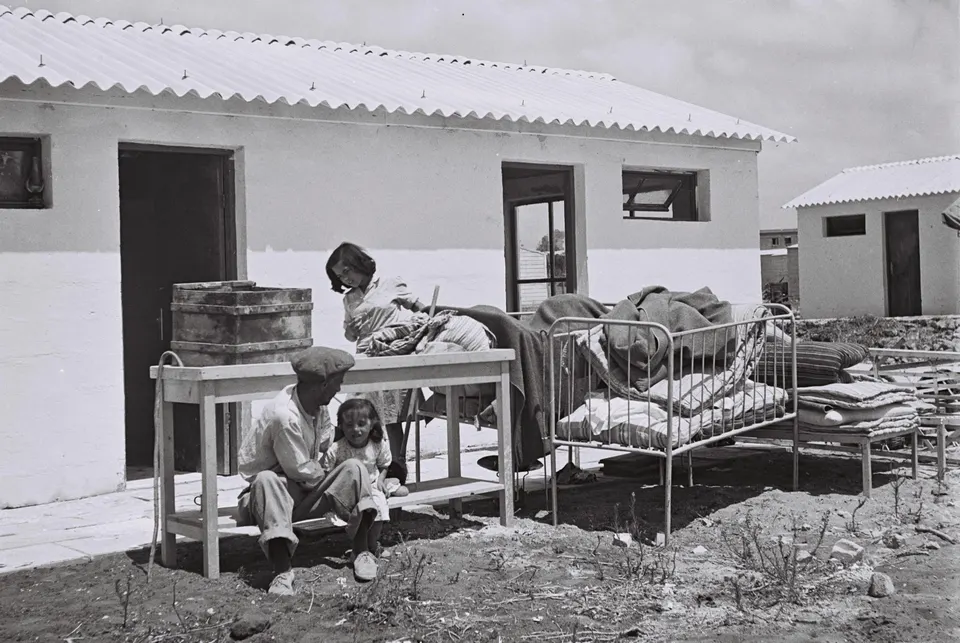
The departure of Jewish communities from Arab countries and Iran in the 20th century
From Iraq to Morocco and Iran, violence, changes to nationality laws and organised migration transformed Jewish communities in the course of the 20th century.
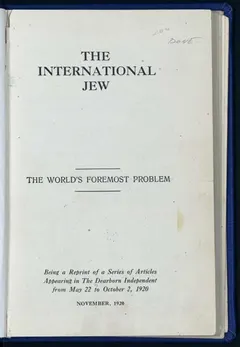
America before the Holocaust: from the lynching of Leo Frank to immigration quotas
From the Leo Frank case to the fate of Jewish refugees, how did antisemitism manifest itself in the United States before the Second World War?
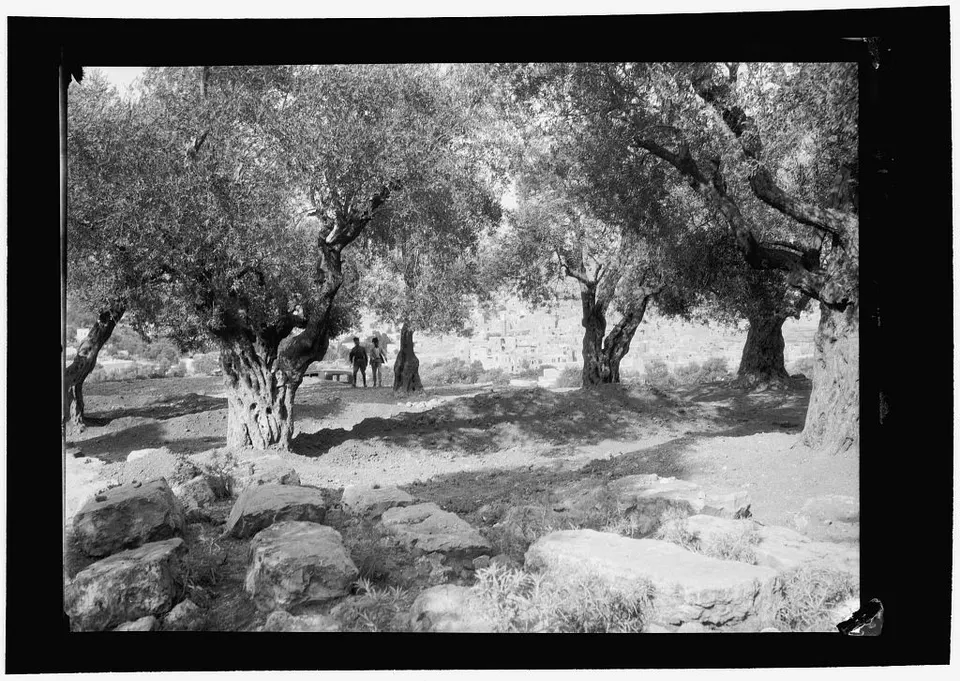
Hebron, 24 August 1929: the massacre that uprooted a four-century-old Jewish community
What happened in Hebron in August 1929? This account traces the massacre of Jewish residents, the help given by Arab neighbours and the evacuation of the survivors.