In Paris, historians revisit Raul Hilberg, from the printed page to the screen in Shoah
A Paris conference marking the centenary of Raul Hilberg’s birth examines how he revised his book and how he worked with filmmaker Claude Lanzmann.
Read this article in: FrançaisEspañolItalianoעבריתالعربيةفارسیРусскийहिन्दी
Translated from French. Read the original.

Following the opening on Sunday 8 November 2026 at the Mémorial de la Shoah, the first working day of the Raul Hilberg conference takes place on Monday 9 November at the German Historical Institute in Paris 12. At the centre of the programme is a book Hilberg revised over several decades. First published in English in 1961 as The Destruction of the European Jews, it appeared in French in 1988, published by Fayard 7. In it, Hilberg explores how the Nazi regime organised the extermination of Europe’s Jews. The organisers have invited scholars to consider what changed from one edition to the next 123.
A historian in Claude Lanzmann’s film
The opening programme at the Mémorial de la Shoah on 8 November paired a lecture by historian Olof Bortz with a 5pm screening of footage left out of the final cut of Shoah. Two women who worked on the film, Irena Steinfeldt-Levy and Caroline Champetier, were scheduled to discuss Claude Lanzmann’s work with Hilberg 124.
In the film, viewers see Hilberg reading a railway document. A sheet setting out the movements of trains allows him to explain how deportations were organised. It illustrates his way of reading administrative records whose authors set down the practical details of a crime 56.
From one edition to the next
At the German Historical Institute, the 9.45am session on 9 November examines versions of the book published between 1961 and 2006. The 11.30am discussion takes the question beyond the Holocaust. In the programme, Ilsen About considers it in relation to the genocide of the Roma and Sinti, and François Robinet in relation to the genocide of the Tutsi 12.
Vichy sources on the programme for 10 November
On Tuesday 10 November, the conference is due to continue at the École des hautes études en sciences sociales on Boulevard Raspail. The 9.30am session examines the reception of Hilberg’s work in Germany and France. Historian Tal Bruttmann is due to consider the weight given to Laval’s statements in analysing Vichy’s anti-Jewish policies. The morning sessions are advertised as being in English, with no registration required 12.
What this tells us
At first glance, a railway timetable seems far removed from an account of the Holocaust. In Hilberg’s hands, it brings into view the work of those who organised the transports. The session on Vichy proposes bringing the same critical attention to a politician’s words. How much weight should Laval’s statements carry in establishing his government’s responsibility? 1256
Sources
- Centre d’histoire de Sciences Po, « Conference | Raul Hilberg, a Historian and his Century », programme des 8–10 novembre 2026, https://www.sciencespo.fr/histoire/fr/evenements/conference-raul-hilberg-a-historian-and-his-century/
- Institut historique allemand et comité d’organisation, « Raul Hilberg, a Historian and his Century », programme officiel, version du 15 octobre 2026, https://www.dhi-paris.fr/fileadmin/user_upload/DHI_Paris/05_Veranstaltungen/02_Tagung/2026/20261108_programm_Hilberg_final.pdf
- Fondation pour la Mémoire de la Shoah, « Raul Hilberg, un historien et son siècle », notice du colloque des 8–10 novembre 2026, https://fondationshoah.org/recherche/raul-hilberg-un-historien-et-son-siecle-lecriture-de-lhistoire-de-la-shoah-hier-et
- Mémorial de la Shoah, « Colloque international – Raul Hilberg, un historien et son siècle », agenda de la Ville de Paris, 8 novembre 2026, https://www.paris.fr/evenements/colloque-international-raul-hilberg-un-historien-et-son-siecle-l-ecriture-de-l-histoire-de-la-shoah-hier-et-aujourd-hui-116653
- Claudia Koonz, « On Reading a Document », conférence Raul Hilberg, université du Vermont, 2 novembre 2005, p. 1–2, https://www.uvm.edu/d10-files/documents/2024-10/KoonzHilbergLecture_002.pdf
- Adam Brown, Judging “Privileged” Jews, Berghahn Books, 2013, édition en accès libre de 2018, p. 114–116, https://uplopen.com/books/9143/files/531640b5-3907-462b-a6ab-f06be9d6a0c4.pdf
- Annales, édition française de 1988, https://www.cambridge.org/core/journals/annales-histoire-sciences-sociales/article/abs/raul-hilberg-la-destruction-des-juifs-deurope-paris-fayard-1988-1-100-p/CEEED86688B5B3683551C21F33769AC8
The story in 30 seconds
Read the main facts at a glance and share the link.
- A Paris conference from 8 to 10 November 2026 marks the centenary of Raul Hilberg’s birth.
- On 9 November, the German Historical Institute traces revisions to The Destruction of the European Jews from 1961 to 2006.
- On 10 November, a session at the EHESS examines how Hilberg studied Vichy’s anti-Jewish policies.
Spotted an error or a missing source? Write to us : we publish corrections in the article.
Related reading
America before the Holocaust: from the lynching of Leo Frank to immigration quotas
From the Leo Frank case to the fate of Jewish refugees, how did antisemitism manifest itself in the United States before the Second World War?
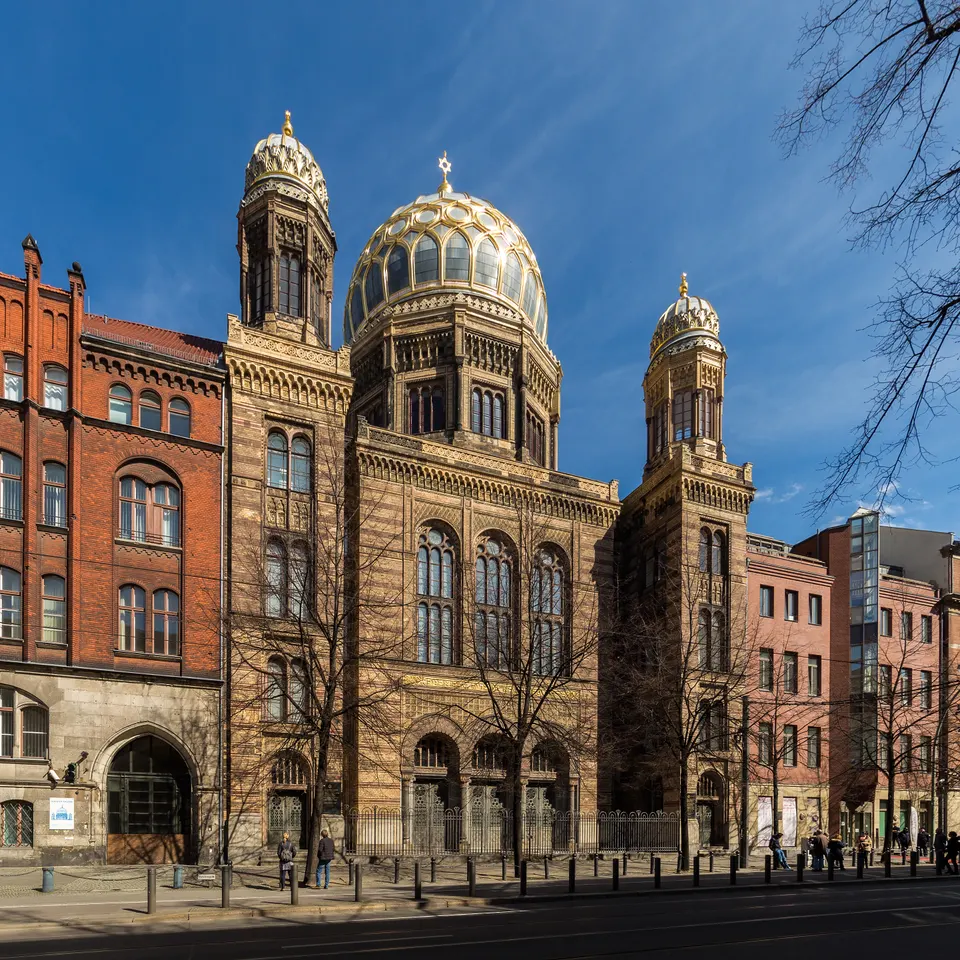
Antisemitism in Europe, 88 years after Kristallnacht: police meet in Berlin and France sets a date for debate
In Berlin, police chiefs met a survivor of the 1938 pogrom. In France, the Senate has put a bill on racism and antisemitism on its December agenda.
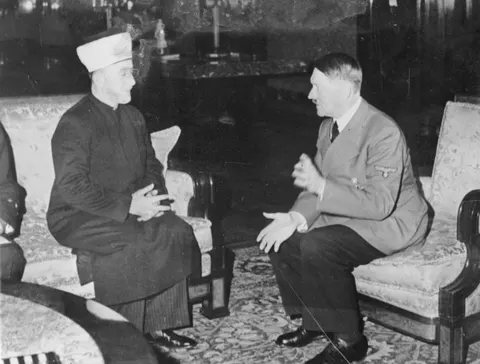
The Mufti of Jerusalem meets Hitler: what the documents say
On 28 November 1941, Hitler received the Mufti of Jerusalem in Berlin. What does the German record establish about their meeting and its consequences?