Where does the name Palestine come from? A word’s history, from the Philistines to the PLO
The Philistines, Herodotus, the caliphs, the Ottomans, the British Mandate and the PLO. What has “Palestine” meant over the centuries, and what can a name prove?
Read this article in: FrançaisEspañolItalianoעבריתالعربيةفارسیРусскийहिन्दी
Translated from French. Read the original.
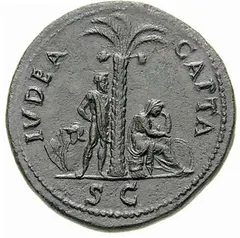
Today the name “Palestine” is a word people fight over. To some, it proves that an Arab people has lived in the country “since time immemorial”. To others, it was a Roman invention designed to erase Judaea. This article traces what the word meant from one century to the next, stopping where the documentary evidence runs out.
The Philistines: a people of the coast
The word has an identifiable root: the Philistines (Pelishtim in Hebrew, Peleset or Prst in Egyptian). Egyptian inscriptions list them among the “Sea Peoples” whom Ramesses III fought around 1180 BCE. They appear in the archaeological record of the Levantine coast in the early 12th century BCE 2. Archaeologist David Jacobson summarises the prevailing view: coming from Greece or Cyprus by way of Egypt, they settled on the eastern Mediterranean coast towards the end of the 13th century BCE 6.
Their territory was narrow, the southern coastal plain with its five cities of Gaza, Ashkelon, Ashdod, Ekron and Gath 2. The Philistine cemetery at Ashkelon, identified in 2013, was presented to the public in 2016 2. The Philistines subsequently disappeared as a distinct people, but the name of their region survived.
Herodotus: “this part of Syria, as far as Egypt”
The first Greek author known to have used the word was Herodotus, writing in the second half of the fifth century BCE 7. In his account of the Scythian invasion, he places the encounter with Pharaoh Psammetichus “in that part of Syria called Palestine”, then describes the sack of the temple at Ascalon 16. Listing Xerxes’ fleet, he writes that the Phoenicians, “with the Syrians who dwell in Palestine”, supplied 300 ships, and explains that “this part of Syria, and all the country as far as Egypt, is called Palestine” 1.
How much territory did Herodotus mean? Scholars disagree. Louis Feldman (1990) holds that the term referred primarily to the coast where the Philistines had lived, and that Herodotus probably knew only the seaboard. Jewish authors such as Philo and Josephus would use “Judaea” for the country and reserve “Palestine” for the Philistine coast 6. David Jacobson (2001) argues, by contrast, that Greek and Latin uses of Palaistinē generally referred to the whole land of Israel. Aristotle, for instance, located in “Palestine” a salt lake in which nothing sinks. It can only have been the Dead Sea 6.
Roman Judaea
Rome called the country “Judaea”. It was initially a client kingdom under Herod. After his son Archelaus was deposed, “Judaea was annexed to the province of Syria”. The senator Quirinius came to conduct a census, and Coponius, a Roman equestrian, received “supreme authority over the Jews”, according to Flavius Josephus 3. One of his successors, Pontius Pilate, provoked a crisis by bringing standards bearing the emperor’s image into Jerusalem 17.
132–135: Bar Kokhba, the suppression of the revolt and a new name
The second great revolt began in 132 under Hadrian. Our principal source, the early third-century historian Cassius Dio, survives in a Byzantine abridgement. He gives this explanation: at Jerusalem Hadrian “founded a city in place of the one which had been razed, naming it Aelia Capitolina”, and erected a temple to Jupiter on the site of the Temple. The Jews found it “intolerable that foreign peoples should settle in their city” 4. Surviving letters of Simon bar Kokhba show him in command by April 132. His last stronghold, Betar, fell in the winter of 135–136 5.
Dio gives figures for the suppression of the revolt: 50 fortresses and 985 villages destroyed, 580,000 men killed in the fighting, besides those who died of hunger and disease, “so that nearly the whole of Judaea was laid waste” 45. Ancient figures warrant caution. Historians of antiquity often rounded numbers up or exaggerated them, and the text survives only in abridgement. Archaeological evidence from Judaean villages does, however, confirm the scale of the destruction 5.
After this war, the province of Judaea appears under the name Syria Palaestina 58. The traditional and still most widespread interpretation is punitive: the name of a defeated people was to be wiped from the map 5. Several historians qualify that account. Louis Feldman notes that only circumstantial evidence connects Hadrian to the change and that “the precise date when this occurred is uncertain” 6. Cassius Dio describes Aelia Capitolina in detail but says nothing about renaming the province 4. Nor was the name itself new. Greek authors had used it for six centuries 16. What is certain is that Judaea disappeared as an official Roman name in the second century and “Palestine” took its place.
Three Byzantine Palestines and an Arab jund
From the fourth century, the late Roman administration divided the country into three provinces: First, Second and Third Palestine. The third, also called Salutaris, extended into the Negev and present-day Jordan 78. After the Arab conquest (Jerusalem fell in 638), the Umayyad caliphate made the region a military district, the jund Filastin, alongside the jund al-Urdunn to the north. Tenth-century Arab geographers still listed Filastin among the provinces of Syria 78. The name thus passed without interruption from Greek into Latin and then Arabic.
Under the Ottomans, no province called Palestine
From 1517 to 1917 the country belonged to the Ottoman Empire, which had no administrative unit called Palestine. The centre and south initially belonged to the vilayet of Damascus. The north (Acre, Haifa and Nablus) fell within the vilayet of Beirut. Jerusalem, Gaza, Hebron and Beersheba formed the sanjak of Jerusalem, which in the second half of the 19th century became a separate unit governed directly from Constantinople 8. As the Encyclopaedia Judaica puts it, the country “was not an administrative unit under the Ottoman Empire, when it formed part of the province of Syria” 8.
The British Mandate: “Palestine” and “Eretz Israel” on the same stamps
The British established a civilian administration in 1920, and the League of Nations approved the text of the Mandate on 24 July 1922 89. It came into force on 29 September 1923 18. The document is entitled “The Palestine Mandate”. Its preamble repeats the 1917 declaration supporting “the establishment in Palestine of a national home for the Jewish people”. Article 22 states that “English, Arabic and Hebrew shall be the official languages of Palestine” 9.
The official name appeared in three languages. On the 1927 pictorial stamp series (Rachel’s Tomb, the Dome of the Rock, the Tower of David and Tiberias), the Hebrew inscription reads “Palestina (א״י)”. The two letters in brackets are the initials of Eretz Israel, “Land of Israel”, the traditional Hebrew name for the country 10. The same wording appears on the coins and banknotes of Mandatory Palestine, including the 1927 one-mil coin and the 1939 one-pound note 21.
In that setting, “Palestinian” described any inhabitant of the territory. Jewish institutions used the word first and foremost for Jews themselves. The English-language daily Gershon Agron founded in Jerusalem in 1932 was The Palestine Post until 1950, when it became The Jerusalem Post 11. The orchestra Bronisław Huberman founded with 75 Jewish musicians from Europe gave its first concert under Toscanini on 26 December 1936 as the Palestine Orchestra. It became the Israel Philharmonic Orchestra in 1948 12. Some 30,000 Jewish volunteers from Palestine served with British forces in the Second World War. The Jewish Brigade, formed in September 1944, numbered more than 5,000 13. Meanwhile, the country’s Arab leaders, including Amin al-Husseini, the Mufti of Jerusalem, rejected the Mandate and the Jewish national home it provided for (see the Mufti of Jerusalem’s meeting with Hitler).
The PLO charters of 1964 and 1968
Palestinian Arab national identity was already a subject of discussion in the late Ottoman period and under the British Mandate 1920. The Palestinian National Charter, adopted at the founding of the PLO in 1964, proclaimed that “Palestine is an Arab homeland”. It defined Palestinians as “the Arab citizens who were living normally in Palestine up to 1947” and added that “Jews of Palestinian origin are considered Palestinians if they are willing to live peacefully and loyally in Palestine”. Article 24 stated that the Organisation exercised “no regional sovereignty” over the West Bank, then under Jordanian rule, or the Gaza Strip 14.
The revision of July 1968 hardened the wording. “Palestine, with the boundaries it had during the British Mandate, is an indivisible territorial unit” (Article 2). Only “the Jews who had normally resided in Palestine until the beginning of the Zionist invasion” were considered Palestinians (Article 6). “Claims of historical or religious ties of Jews with Palestine” were pronounced “incompatible with the facts of history” (Article 20) 15. In Article 20 the PLO declared the Balfour Declaration and the Mandate null and void 15. The UN would take up this vocabulary in the 1970s (see Resolution 3379).
Chronology
- c. 1180 BCE — Ramesses III fights the “Sea Peoples”, including the Peleset. The Philistines settle on the southern coast of the Levant 2.
- Second half of the fifth century BCE — Herodotus writes that the part of Syria extending to Egypt “is called Palestine” 17.
- Early first century CE — Judaea is attached to the province of Syria and entrusted to Coponius. Quirinius conducts a census 3.
- 132-135/136 — Bar Kokhba revolt. Dio links the plan to refound Jerusalem as Aelia Capitolina to the outbreak of the revolt 4. The date when the province was renamed remains disputed 56.
- Fourth century — Division into First, Second and Third Palestine 78.
- 638-640 — Arab conquest. The region becomes the jund Filastin 78.
- 1517 — Ottoman conquest. There is no province called “Palestine” between then and 1917 8.
- 1920 — British civilian administration begins 8.
- 1922-07-24 — The League of Nations approves the Mandate for Palestine, with three official languages 9. The Mandate comes into force on 29 September 1923 18.
- 1927-06-01 — First pictorial stamps inscribed “Palestine / Palestina (א״י) / Filastin” 10.
- 1932-1944 — The Palestine Post (1932), the Palestine Orchestra (1936) and the Jewish Brigade (1944). Jewish institutions use the name of the country 111213.
- 1948-05 — The Mandate ends and the State of Israel is proclaimed 8.
- 1964 — The Palestinian National Charter is adopted and the PLO founded 14.
- 1968-07 — The revised charter invokes the “boundaries of the Mandate” and denies Jewish ties to the country 15.
What this tells us
Two opposing slogans circulate. “Palestine never existed. Hadrian invented the name.” That is false: the word is six centuries older. It designated Byzantine provinces and then a district of the early caliphates. Its geographical use continued under other administrative arrangements 78. “Palestinians have been here for four thousand years and Jews are settlers.” That is false too. The 1964 charter formalised a Palestinian Arab national identity already attested under the Mandate 141920. Jewish institutions also bore the territory’s name 1112. In both cases a place name is being asked to settle a political conflict, something no place name can do. The history of a word and the politics of the present are different questions.
Sources
- Hérodote, Histoires, VII, 89 (et I, 105), trad. G. C. Macaulay, Lexundria, https://lexundria.com/hdt/7.89/mcly
- Kristin Romey, « Discovery may reveal the origins of the Hebrew Bible's greatest villains », National Geographic, 10 juillet 2016, https://www.nationalgeographic.com/history/article/bible-philistine-israelite-israel-ashkelon-discovery-burial-archaeology-sea-peoples
- Flavius Josèphe, Antiquités juives, XVIII, 1-10 (Quirinius, Coponius) et 55-56 (Pilate), trad. W. Whiston, Lexundria, https://lexundria.com/j_aj/18.1-18.10/wst
- Cassius Dion, Histoire romaine, LXIX, 12-14 (abrégé), trad. E. Cary, Loeb 1925, LacusCurtius (université de Chicago), https://penelope.uchicago.edu/Thayer/E/Roman/Texts/Cassius_Dio/69*.html
- Jona Lendering, « Roman-Jewish Wars : Bar Kochba », Livius.org, https://www.livius.org/articles/concept/roman-jewish-wars/roman-jewish-wars-8/
- David M. Jacobson, « When Palestine Meant Israel », Biblical Archaeology Review 27/3, mai-juin 2001 (version grand public de « Palestine and Israel », BASOR 313, 1999), citant Louis H. Feldman, « Some Observations on the Name of Palestine », Hebrew Union College Annual 61, 1990, https://library.biblicalarchaeology.org/article/when-palestine-meant-israel/
- Glen W. Bowersock, « The Many Lives of Palestine » (recension de Nur Masalha, Palestine: A Four Thousand Year History, Zed Books, 2018), The New York Review of Books, 18 avril 2019, https://www.nybooks.com/articles/2019/04/18/nur-masalha-many-lives-palestine/
- « Palestine », Encyclopedia.com (entrées de l'Encyclopaedia Judaica, de l'Encyclopedia of the Modern Middle East and North Africa [Don Peretz] et du Dictionary of the Israeli-Palestinian Conflict), https://www.encyclopedia.com/places/asia/israeli-political-geography/palestine
- Société des Nations, « The Palestine Mandate », Londres, 24 juillet 1922, Avalon Project, Yale Law School, https://avalon.law.yale.edu/20th_century/palmanda.asp
- Zobbel, « Palestine : Pictorials 1927 » (catalogue philatélique : légendes et dates d'émission), https://www.zobbel.de/stamp/pal_09e.htm
- « Jerusalem Post », Encyclopaedia Judaica, via Encyclopedia.com, https://www.encyclopedia.com/religion/encyclopedias-almanacs-transcripts-and-maps/jerusalem-post
- Orchestre philharmonique d'Israël, « History », https://www.ipo.co.il/en/about/history/
- United States Holocaust Memorial Museum, « Jewish Brigade Group », Holocaust Encyclopedia, https://encyclopedia.ushmm.org/content/en/article/jewish-brigade-group
- OLP, « The Original Palestine National Charter » (1964), texte reproduit par la Jewish Virtual Library, https://www.jewishvirtuallibrary.org/the-original-palestine-national-charter-1964
- Conseil national palestinien, « The Palestinian National Charter », 1er-17 juillet 1968, Avalon Project, Yale Law School, https://avalon.law.yale.edu/20th_century/plocov.asp
- Hérodote I, 105, https://lexundria.com/hdt/1.105/mcly
- Josèphe XVIII, 55–59, https://lexundria.com/j_aj/18.55-18.59/wst
- SDN, constat de prise d’effet, https://www.un.org/unispal/document/auto-insert-204395/
- Rashid Khalidi, Palestinian Identity, https://www.jstor.org/stable/10.7312/khal15074.7
- ICGS, histoire du mouvement national, https://icgs.org.il/en/publications/were-the-palestinians-invented/
- Palestine Currency Board, pièce de 1 mil de 1927 et billet de 1 livre de 1939, reproductions des spécimens A et B, https://www.palestinianhistory.org/currency
The story in 30 seconds
Read the main facts at a glance and share the link.
- The name derives from the Philistines, who settled along the coast from Gaza to Ashdod in the late 13th or early 12th century BCE.
- In the 5th century BCE, Herodotus called part of Syria bordering Egypt “Palestine”. Rome used “Judaea” until the Bar Kokhba revolt in 132–135 CE.
- The British Mandate came into force in 1923. In 1964 the PLO charter gave Palestinian identity a political definition.
Spotted an error or a missing source? Write to us : we publish corrections in the article.
Related reading
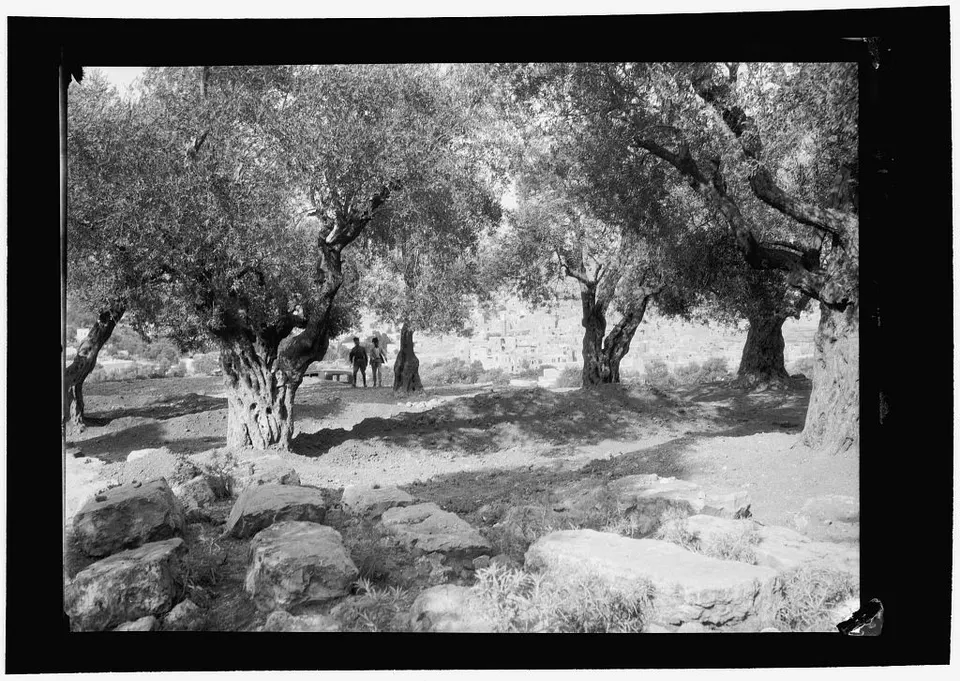
Hebron, 24 August 1929: the massacre that uprooted a four-century-old Jewish community
What happened in Hebron in August 1929? This account traces the massacre of Jewish residents, the help given by Arab neighbours and the evacuation of the survivors.

How the Soviet Union helped bring Israel into being: Gromyko at the UN, Czech arms and a break in relations
From the UN vote on the partition of Palestine to arms deliveries from Czechoslovakia, how did the Soviet Union put its support for Israel into practice in 1947 and 1948?
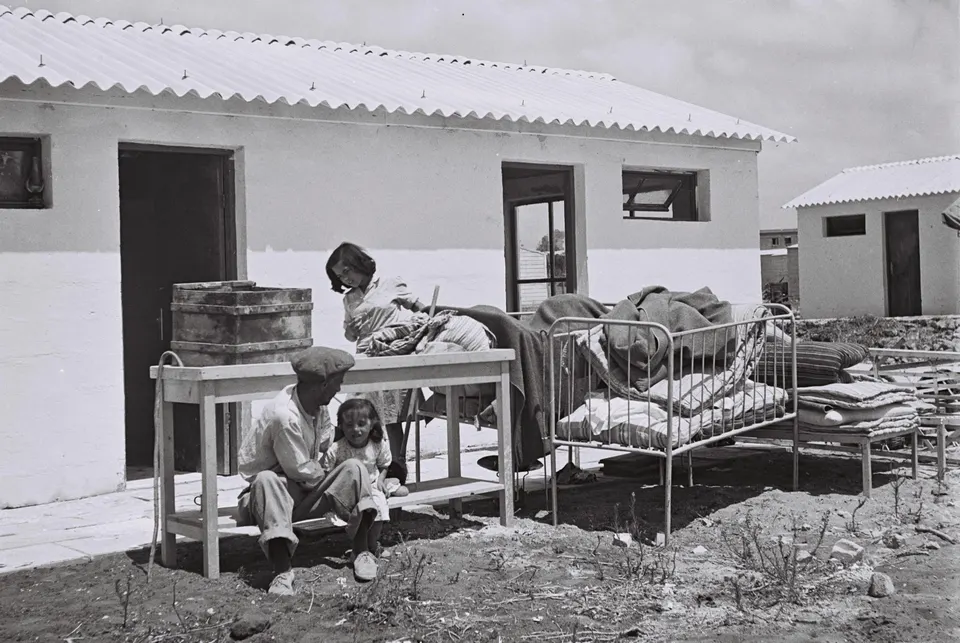
The departure of Jewish communities from Arab countries and Iran in the 20th century
From Iraq to Morocco and Iran, violence, changes to nationality laws and organised migration transformed Jewish communities in the course of the 20th century.