‘Zionism is a form of racism’: UN Resolution 3379 (1975–1991)
In 1975, UN Resolution 3379 equated Zionism with racism. Which countries voted for it, and how did the General Assembly revoke it in 1991?
Read this article in: FrançaisEspañolItalianoעבריתالعربيةفارسیРусскийहिन्दी
Translated from French. Read the original.
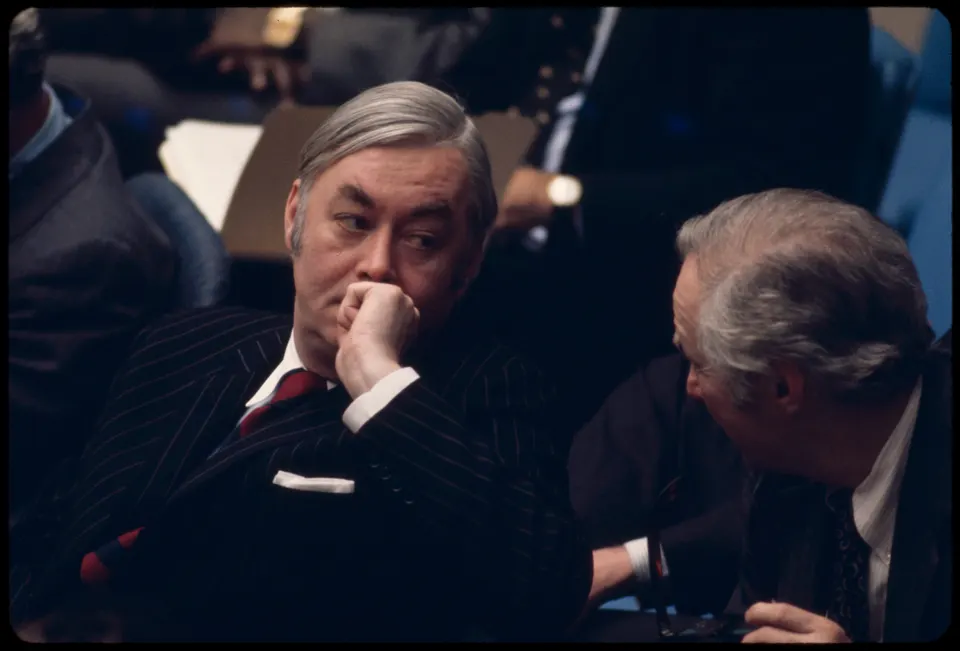
At 3.50pm on 10 November 1975, Gaston Thorn of Luxembourg opened the 2,400th plenary meeting of the United Nations General Assembly in New York. On the agenda was the Third Committee’s report on the ‘elimination of all forms of racial discrimination’. After several paragraphs of preamble, the resolution’s operative part consisted of a single sentence. The Assembly ‘determines that Zionism is a form of racism and racial discrimination’ 1. In a roll-call vote, 72 countries voted in favour, 35 against and 32 abstained. The text became Resolution 3379 (XXX) 12.
Sixteen years later, on 16 December 1991, the same Assembly passed a one-line resolution, 46/86. It ‘decides to revoke the determination contained in its resolution 3379 (XXX) of 10 November 1975’ 3. The vote was 111 in favour, 25 against, with 13 abstentions 34. The Soviet Union co-sponsored the repeal. It was still in existence when the vote took place 34.
June 1967: Moscow breaks with Israel and its propaganda changes course
The Soviet Union had voted for the partition of Palestine in 1947 and allowed Czechoslovakia to arm the fledgling Jewish state in 1948 (see How the Soviet Union helped create Israel). Twenty years later, Moscow had changed sides. On 10 June 1967, the last day of the Six-Day War, the USSR and several socialist countries broke off diplomatic relations with Israel. They were restored only between 1989 and 1991 5. The Egyptian and Syrian armies, which Moscow had equipped and advised, had just suffered crushing defeats. In the Soviet press, Israel became an ‘aggressive’, ‘pro-American’ state, an outpost of ‘imperialism’. As early as the summer of 1967, Pravda and Izvestia published cartoons depicting Israeli soldiers as puppets whose strings were pulled by Western capital 5.
Historian Izabella Tabarovsky of the Wilson Center’s Kennan Institute dates to 1967 the start of a campaign that party ideologues and the KGB directed until 1988 6. On 7 August 1967, several Soviet publications simultaneously carried an article by Yuri Ivanov entitled ‘What Is Zionism?’ In 1969 Ivanov, a Central Committee official, published Caution: Zionism! The book had an initial print run of 70,000, went through three reprints, was translated into 16 languages and received glowing reviews in the state press 6. It portrayed Zionism as a worldwide network serving capital and controlling the media and governments. This was the plot of the Protocols of the Elders of Zion (see our account of the forgery), retold in Marxist terms.
This ‘Zionology’ had a precedent. In 1963 the Ukrainian Academy of Sciences published Trofim Kichko’s Judaism Without Embellishment in Kyiv. Western observers compared its illustrations to the cartoons in the Nazi newspaper Der Stürmer. In 1964, after denunciations even from Western European communist parties, the book was officially disavowed and withdrawn. But Kichko returned to the subject in 1968 with Judaism and Zionism and once again became one of the campaign’s leading authors 67. Tabarovsky notes that the book was repudiated in 1964 ‘only temporarily’ 6. Anti-Zionist cartoons became a regular feature of Soviet newspapers. In 1972 the satirical magazine Krokodil depicted a ‘Zionist’ octopus with tentacles labelled aggression, provocation and terror 6. In the 1970s it became commonplace to equate Zionism with Nazism. The comparison appeared 96 times in the publications surveyed for 1970 alone 6. In 1990 a Pravda editorial would acknowledge the ‘considerable damage’ the campaign had done 6.
March 1968: the ‘anti-Zionist’ purge in Poland
Poland’s so-called anti-Zionist campaign culminated in the purges of March 1968 89. Historian Dariusz Stola of the Polish Academy of Sciences reconstructed the sequence of events from party archives 8. On 6 June 1967 the Polish Politburo laid down its ‘propaganda guidelines’. The next day the government condemned Israeli ‘aggression’, and thousands of workers’ meetings passed motions supporting the Arab countries. Addressing the Trade Union Congress on 19 June 1967, First Secretary Władysław Gomułka said that Israeli aggression had ‘met with applause in Zionist circles of Jews—Polish citizens’. He went on: ‘we do not want a fifth column to emerge in our country’. He urged ‘those who feel that these words are addressed to them’ to emigrate. The audience applauded 8. Several Politburo members objected, and the line about the fifth column disappeared from the printed version. But, Stola notes, the Soviet press published the speech and Brezhnev personally congratulated Gomułka 8.
In government ministries, particularly the Interior Ministry under General Mieczysław Moczar, the anti-Zionist directive became an instrument for purging staff. The purge came into the open in March 1968 when the regime suppressed student demonstrations and named the culprits: ‘revisionists, Zionists, servants of imperialism’. Jewish party officials lost their jobs, followed by newspaper editors, university lecturers, schoolteachers and factory foremen. Between 1968 and 1970 some 13,000 people, half the Jews still living in Poland, applied for permits to emigrate to Israel 8. They left from Warsaw’s Gdańsk railway station after being made to renounce their Polish citizenship 9. Stola calls it a ‘verbal and symbolic pogrom’. In practice, he notes, ‘Zionist’ meant Jew, even when the person targeted was not Jewish 8. One point matters for what followed. The records of Polish-Soviet meetings in 1967 and 1968 show no encouragement from Moscow before the events. The congratulations came afterwards 8.
1970–1975: refuseniks, the Jackson–Vanik amendment and strategy at the UN
Meanwhile, the 1967 war had revived the desire to emigrate among Soviet Jews. Those whose applications were denied, known as ‘refuseniks’, often lost their jobs. In March 1974 President Nixon recalled the figures. Before negotiations began, about 400 Soviet Jews a year had left. In the first year of détente, 17,000 left, and in the next, 35,000 10. The US Congress wanted to go further. An amendment proposed by Senator Henry Jackson and Representative Charles Vanik tied most-favoured-nation trading status and Export-Import Bank credits to freedom to emigrate. Congress passed the Trade Act on 20 December 1974, and Gerald Ford signed it on 3 January 1975. On 14 January Moscow rejected the conditions and repudiated the 1972 trade agreement 10. Jewish emigration became a major point of contention between East and West. In Soviet propaganda, the word ‘Zionism’ now served a domestic purpose as well as a foreign one.
Internationally, the ground was laid in stages. Resolution 3379’s own preamble traces the sequence 2. It recalls Resolution 3151 G of 14 December 1973, which had already condemned ‘the unholy alliance between South African racism and Zionism’. It cites the declaration of the International Women’s Year conference in Mexico City (19 June–2 July 1975) and Resolution 77 (XII), adopted by Organisation of African Unity heads of state in Kampala (28 July–1 August 1975), which attributed ‘a common imperialist origin’ to the ‘racist regimes’ in occupied Palestine, Rhodesia and South Africa. It also cites the declaration of the non-aligned countries in Lima (25–30 August 1975), which called Zionism ‘a threat to world peace and security’. On 17 October 1975 the Third Committee adopted the draft by 70 votes to 29, with 27 abstentions. The American Jewish press described it as ‘Arab-sponsored’ and backed by a bloc of ‘Arab, Communist, Third World’ states 111.
10 November 1975: the General Assembly debate
The official record of the 2,400th plenary meeting recounts the day’s proceedings 1. Israel’s representative, Chaim Herzog, spoke before the vote. He recalled that 10 November was the 37th anniversary, to the day, of Kristallnacht on 10 November 1938, the night that led ‘eventually to the crematoria and the gas-chambers’. He described the draft as ‘conceived in the desire to deflect the Middle East from its moves towards peace and born of a deep, pervading feeling of anti-Semitism’. He concluded: ‘For us, the Jewish people, this resolution, based on hatred, falsehood and arrogance, is devoid of any moral or legal value. For us, the Jewish people, this is no more than a piece of paper’ 1. According to the account given by his family and the State of Israel, and recalled 50 years later by his son, President Isaac Herzog, he then tore up the text at the rostrum 12. The official record, which reports only what was said, makes no mention of the gesture.
The vote was taken by roll call 1. Romania was not listed among those voting. Those in favour included the USSR, Soviet Ukraine and Soviet Byelorussia, Poland, Hungary, Czechoslovakia, Bulgaria, East Germany, Cuba, China, all the Arab states, India, Brazil, Mexico, Turkey, Portugal and Yugoslavia. Those against included the United States, Israel, France, the United Kingdom, West Germany, Italy, the Benelux and Nordic countries, Canada, Australia, New Zealand, Austria and Ireland, as well as Côte d’Ivoire, Liberia, Malawi, the Central African Republic and several Central American and Caribbean states. The 32 abstentions included Japan, Greece, Argentina, Chile, Colombia, Venezuela, Peru, the Philippines, Singapore, Kenya, Ghana, Zaire and Ethiopia 12.
After the vote, France’s ambassador, Louis de Guiringaud, asked for his country’s votes on two related resolutions concerning the Decade for Action to Combat Racism to be recorded as abstentions. ‘It is now clear that they are related to the text on Zionism.’ France, he said, ‘cannot subscribe to the idea of equating Zionism and racism’. He expressed the hope ‘that the Organization will come to its senses’ 1.
Finally came Daniel Patrick Moynihan, the US representative, who had chosen to speak in the vote’s ‘aftermath’. The words he delivered in the chamber, preserved in the official record, became famous: ‘The United States rises to declare before the General Assembly and before the world, that it does not acknowledge, it will not abide by, it will never acquiesce in this infamous act.’ Then: ‘A great evil has been loosed upon the world.’ Citing Andrei Sakharov, that year’s Nobel Peace laureate, he said: ‘The abomination of anti-Semitism … has been given the appearance of international sanction.’ The Assembly, he added, ‘today grants symbolic amnesty—and more—to the murderers of the 6 million European Jews’ 1. The line often quoted in French, ‘the UN is about to make antisemitism international law’, is a paraphrase of this passage. The words Moynihan used were ‘international sanction’.
1975–1991: what the resolution changed
The resolution had no binding force, but it gave the equation the UN’s imprimatur. For 15 years, conferences and international organisations cited it in their texts. Israel invoked it to justify refusing any UN mediation in the Middle East conflict 4.
The fall of the Berlin Wall changed the diplomatic landscape. On 18 October 1991, Soviet Foreign Minister Boris Pankin announced in Jerusalem that the USSR was restoring diplomatic relations with Israel. Twelve days later the Madrid peace conference opened. Co-chaired by George Bush and Mikhail Gorbachev, it ran from 30 October to 4 November 1991 and brought together Israel, Syria, Lebanon, Egypt and a joint Jordanian-Palestinian delegation 1314. Bush had already called for the repeal of Resolution 3379 when he addressed the General Assembly in September 1991 4. On 16 December 1991, US Deputy Secretary of State Lawrence Eagleburger introduced a one-sentence text co-sponsored by 85 states, including the Soviet Union. Yemen sought to require a two-thirds majority. Its motion was defeated by 96 votes to 34. Resolution 46/86 passed by 111 votes to 25, with 13 abstentions 34. The 25 votes against came from Arab and Muslim states, together with Cuba, North Korea, Sri Lanka and Vietnam. Egypt, Kuwait, Bahrain, Oman, Morocco and Tunisia did not take part in the vote 4. ‘We pushed back the darkness,’ said Israeli Foreign Minister David Levy 4.
After 1991: the language outlives the resolution
Repeal removed the resolution from the books. Its language survived. At the World Conference Against Racism in Durban, South Africa (31 August–8 September 2001), the draft declaration negotiated by governments and, more explicitly, the NGO forum’s declaration again characterised Israel as a racist state. On 3 September 2001, US Secretary of State Colin Powell recalled the American delegation. Racism, he said, could not be fought ‘by conferences that produce declarations containing hateful language, some of which is a throwback to the days of “Zionism equals racism”’, or by language that ‘singles out only one country in the world—Israel—for censure and abuse’ 15. Israel also withdrew.
Chronology
- 1963 — Trofim Kichko’s Judaism Without Embellishment is published in Kyiv. It is disavowed and withdrawn in 1964 after international protests 7.
- 10 June 1967 — The USSR and several Soviet bloc countries break off diplomatic relations with Israel 5.
- 19 June 1967 — At the Trade Union Congress in Warsaw, Gomułka speaks of a Zionist ‘fifth column’ 8.
- March 1968 — Poland suppresses student protests and conducts an ‘anti-Zionist’ purge. Some 13,000 people apply to emigrate between 1968 and 1970 89.
- 1969 — Yuri Ivanov’s Caution: Zionism! has an initial print run of 70,000 6.
- 14 December 1973 — In Resolution 3151 G, the General Assembly condemns ‘the unholy alliance between South African racism and Zionism’ 2.
- 20 December 1974 / 3 January 1975 — Congress passes the Trade Act containing the Jackson–Vanik amendment. President Ford signs it into law. The Soviet Union rejects the conditions on 14 January 1975 10.
- July–August 1975 — Resolutions from Mexico City, Kampala (Organisation of African Unity) and Lima (non-aligned countries) are later cited in the preamble to Resolution 3379 2.
- 17 October 1975 — The Third Committee adopts the draft by 70 votes to 29, with 27 abstentions 111.
- 10 November 1975 — The General Assembly adopts Resolution 3379 (XXX) by 72 votes to 35, with 32 abstentions. Herzog and Moynihan address the Assembly 12.
- 18 October 1991 — The USSR and Israel restore diplomatic relations 13.
- 30 October 1991 — The Madrid conference opens 14.
- 16 December 1991 — Resolution 46/86 repeals the 1975 determination by 111 votes to 25, with 13 abstentions 34.
- 3 September 2001 — The United States withdraws from the Durban conference, followed by Israel 15.
What this tells us
The resolution’s preamble cites political declarations from 1973 and 1975. The equation of Zionism with Nazism appears in a different set of texts, studied by Tabarovsky 256. Knowing that history helps distinguish two things that the 1975 text had conflated. Criticism of an Israeli government policy, the occupation, settlements or a military operation is part of a legitimate political debate that takes place within Israel itself. To declare a people’s national movement inherently racist is to deny that people, and that people alone, the right to a state. That is what the 35 states that voted against the resolution in 1975, and the 111 that voted for repeal in 1991, refused to endorse. The Polish case also shows how, in just a few months, an ‘anti-Zionist’ directive could become an instrument for purging Jewish citizens who had asked for none of it.
Sources
- Nations unies, Assemblée générale, trentième session, « 2400e séance plénière, lundi 10 novembre 1975 » (procès-verbal officiel A/PV.2400 : rapport de la Troisième Commission, discours de Herzog, de Guiringaud et Moynihan, vote par appel nominal), reproduit par l'Economic Cooperation Foundation, https://content.ecf.org.il/files/M00901_UNGARes3379DebateEnglish.pdf
- Nations unies, résolution 3379 (XXX) « Elimination of all forms of racial discrimination », 10 novembre 1975 (texte intégral et vote par pays), reproduit par la Ruhr-Universität Bochum, Quellensammlung « Konservative Renaissance und Ende des Kalten Krieges », https://www.ruhr-uni-bochum.de/gna/Quellensammlung/11/11_unresolution_1975
- Nations unies, Assemblée générale, résolution 46/86 « Elimination of racism and racial discrimination », A/RES/46/86, 74e séance plénière, 16 décembre 1991, https://unispal.un.org/pdfs/0AEA0B9FE5C99B0885256A9B0061300C.pdf
- Jewish Telegraphic Agency, « U.N. votes 111-25 to rescind 'odious' resolution on Zionism », 17 décembre 1991, https://www.jta.org/archive/u-n-votes-111-25-to-rescind-odious-resolution-on-zionism
- Ksenia Ermishina, « "Israeli imperialists": The Soviet "anti-Israel" campaign of 1967 », Corvinus Journal of International Affairs (COJOURN), vol. 5, n° 1, 2020, https://journals.lib.uni-corvinus.hu/index.php/cojourn/article/download/517/83/1842
- Izabella Tabarovsky, « Soviet Anti-Zionism and Contemporary Left Antisemitism », Fathom, mai 2019, https://fathomjournal.org/soviet-anti-zionism-and-contemporary-left-antisemitism/
- Jewish Telegraphic Agency, « Academics hit new Kichko book as anti-Semitic; protest to Western Communist leaders », 5 mai 1969, https://www.jta.org/archive/academics-hit-new-kichko-book-as-anti-semitic-protest-to-western-communist-leaders
- Dariusz Stola, « Anti-Zionism as a Multipurpose Policy Instrument: The Anti-Zionist Campaign in Poland, 1967-1968 », The Journal of Israeli History, vol. 25, n° 1, mars 2006, p. 175-201, https://www.polishjews.org.au/wp-content/uploads/Stola_Anti-Zionism_as_Multipurpose_Policy_Inst.pdf
- Jewish Telegraphic Agency / J. The Jewish News of Northern California, « Warsaw exhibit bares chilling tale of 1968 purges », 22 juillet 2018, https://www.jweekly.com/2018/07/22/warsaw-exhibit-bares-chilling-tale-of-1968-purges/
- Département d'État des États-Unis, Office of the Historian, Foreign Relations of the United States, 1969-1976, vol. XXXVIII, part 1, document 31, « Editorial Note » (amendement Jackson-Vanik), https://history.state.gov/historicaldocuments/frus1969-76v38p1/d31
- Jewish Telegraphic Agency, « Cabal of Arab, Communist, Third World states formalize their hatred of Zionism and Israel », 20 octobre 1975, https://www.jta.org/archive/cabal-of-arab-communist-third-world-states-formalize-their-hatred-of-zionism-and-israel
- Jewish News Syndicate, « Herzog marks 50 years since father tore anti-Israel UN resolution », 10 novembre 2025, https://www.jns.org/israel-news/herzog-marks-50-years-since-father-tore-anti-israel-un-resolution
- Jewish Telegraphic Agency, « Restoration of Soviet-Israeli ties ends 24 years of abnormal relations », 21 octobre 1991, https://www.jta.org/archive/restoration-of-soviet-israeli-ties-ends-24-years-of-abnormal-relations
- Département d'État des États-Unis, Office of the Historian, « The Madrid Conference, 1991 », Milestones 1989-1992, https://history.state.gov/milestones/1989-1992/madrid-conference
- Colin L. Powell, secrétaire d'État, « Statement on Withdrawal of the U.S. Delegation from the World Conference Against Racism », 3 septembre 2001, archive USINFO du Département d'État, https://usinfo.org/usia/usinfo.state.gov/usa/race/cp030901.htm
The story in 30 seconds
Read the main facts at a glance and share the link.
- On 10 November 1975, the UN General Assembly voted 72–35, with 32 abstentions, to declare that ‘Zionism is a form of racism and racial discrimination’.
- The vote followed eight years of ‘anti-Zionist’ campaigning in the Soviet bloc, from the Six-Day War in June 1967 through the Polish purge of 1968.
- On 16 December 1991, after the Madrid peace conference, the General Assembly voted 111–25 to revoke its 1975 determination.
Spotted an error or a missing source? Write to us : we publish corrections in the article.
Related reading
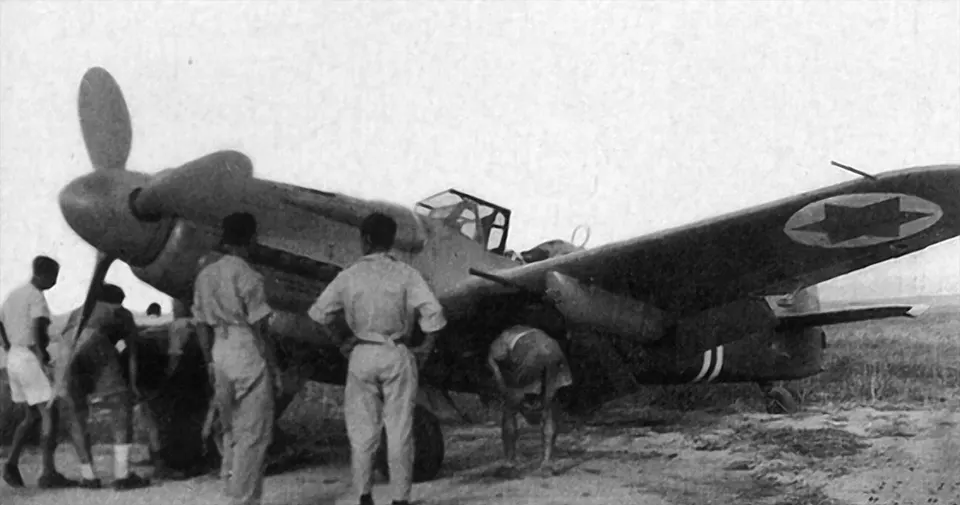
How the Soviet Union helped bring Israel into being: Gromyko at the UN, Czech arms and a break in relations
From the UN vote on the partition of Palestine to arms deliveries from Czechoslovakia, how did the Soviet Union put its support for Israel into practice in 1947 and 1948?
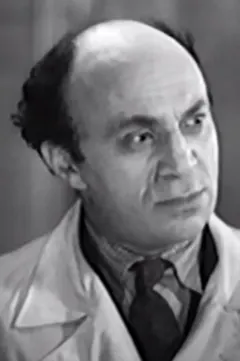
The Doctors’ Plot: antisemitism in Stalin’s final years, 1948–1953
On 13 January 1953, Pravda published false accusations against nine doctors. The Soviet news agency TASS implicated the Joint, an American Jewish organisation.
America before the Holocaust: from the lynching of Leo Frank to immigration quotas
From the Leo Frank case to the fate of Jewish refugees, how did antisemitism manifest itself in the United States before the Second World War?